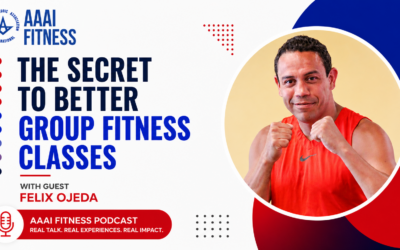
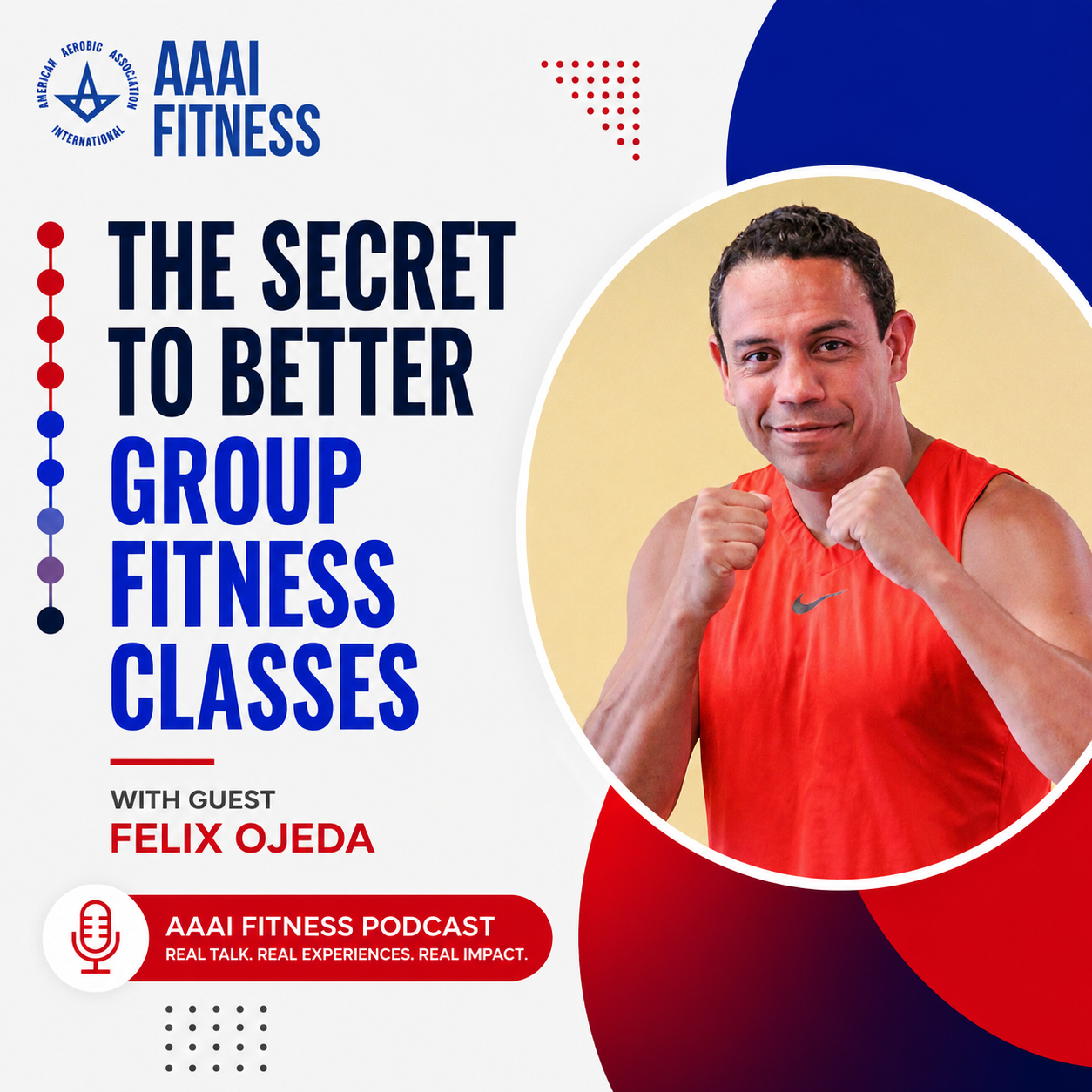
Every instructor has a different path into the fitness industry. Some start by earning certifications before ever stepping into the studio. Others discover their passion after years in another career.
For Felix Ojeda, founder of Palango Fitness, it started with frustration.
As a lifelong athlete with backgrounds in track and field, boxing, basketball, and business, Felix couldn’t find a workout that combined the intensity he wanted with the motivating power of music. Instead of settling, he created one. Sixteen years later, Palango Fitness has grown into an international program with loyal instructors and an impressive client retention rate.
During a recent conversation with AAAI Fitness, Felix shared several lessons that apply to every group fitness instructor, regardless of the format they teach. Whether you lead strength classes, cycling, dance fitness, boot camps, or mind-body formats, these three strategies can help you create stronger classes and build lasting relationships with participants.
1. Make Feedback Part of Your Programming
Many instructors devote hours to planning playlists, choreography, and workouts, but one of the most valuable parts of class actually begins after the music stops. When Felix first started teaching, he intentionally stayed after every class to ask participants what they enjoyed, what they struggled with, and what could be improved. More importantly, he documented their responses and used that feedback to refine his program over time.
That simple habit became one of the foundations of Palango Fitness. Instead of assuming he knew exactly what participants wanted, he allowed their experiences to shape the evolution of his classes. As a result, his workouts became more engaging, more effective, and better suited to the people attending them.
The best instructors never stop being students. They continue learning from certifications and continuing education, but they also learn from the people they teach every day.
2. Coach the Person, Not Just the Workout
Exercise is only one part of a person’s wellness journey. Felix believes instructors should recognize that clients bring far more to class than their fitness goals. They arrive carrying work stress, family responsibilities, health concerns, and countless other life experiences that influence how they move and how they feel.
While instructors are not expected to become nutritionists, therapists, or physicians, they should be prepared to support participants by listening carefully, offering encouragement, and knowing when to refer someone to another qualified professional. Sometimes the most valuable response is simply saying, “I don’t know, but I’ll find out.” That willingness to continue learning builds trust and demonstrates genuine care.
Empathy remains one of the most underrated skills in the fitness industry. Instructors who combine technical expertise with authentic human connection often develop stronger relationships, receive more referrals, and create communities that keep participants engaged for years.
3. Think Bigger Than One Class
One of Felix’s strongest messages centered on career development. He encourages instructors to think beyond teaching a single format or relying on one source of income. Expanding your knowledge through additional certifications, specialty trainings, and new teaching formats increases both your value and your opportunities within the industry.
This advice is particularly relevant for today’s fitness professionals. Facility managers consistently look for instructors who can teach multiple formats, adapt to different audiences, and step into a variety of class schedules. The more versatile you become, the more indispensable you are to your employer and your participants.
Final Thoughts
Throughout the conversation, one message remained consistent: people rarely stay because of the workout alone. They return because they feel welcomed, supported, challenged, and connected to both the instructor and the community surrounding the class.
Technical knowledge may bring participants through the door, but empathy, communication, and a genuine desire to help are what keep them coming back. Great instructors understand that every class is an opportunity to build trust, strengthen relationships, and create an experience that extends well beyond exercise.
Learn more by watching the full interview below or joining Felix and Palango! Fitness at the One World Conference in Denver.
Every instructor has a different path into the fitness industry. Some start by earning certifications before ever stepping into the studio. Others discover their passion after years in another career. For Felix Ojeda, founder of Palango Fitness, it started with...
If you love movement, music, and motivating others, group fitness is the perfect path to channel your passion. But enthusiasm alone isn’t enough to lead safe, effective, and unforgettable classes. That’s where a Group Fitness Instructor Certification comes in—and here...
You are worried your clients are bored. That is why you keep changing every session, rotating new exercises, and refreshing routines that were working just fine. You tell yourself you are keeping things fresh. You tell yourself variety is the point. Here is the secret...
If you love movement, music, and motivating others, group fitness is the perfect path to channel your passion. But enthusiasm alone isn’t enough to lead safe, effective, and unforgettable classes. That’s where a Group Fitness Instructor Certification comes in—and here are five reasons why investing in this credential will take your teaching to the next level.
1. It Gives You a Science-Backed Foundation
A strong instructor isn’t just inspirational—they’re informed. AAAI Fitness’s Group Fitness Instructor Certification grounds you in exercise science, biomechanics, anatomy, and safe training principles. This means your workouts won’t just look good—they’ll be good, reducing injury risk while boosting results for your participants.
2. It Builds Confidence and Credibility
Whether you’re brand new to fitness or transitioning from participant to leader, certification validates your expertise and gives you the confidence to command the room. Clients, gyms, and studios recognize certified professionals as trusted, qualified, and capable—a huge step toward building a successful career in fitness.
3. It Sharpens Your Teaching and Coaching Skills
From cueing and communication to class structure and music integration, this certification teaches you how to lead engaging, safe, and well-rounded classes. You’ll learn how to read the room, adapt on the fly, and create a welcoming experience that meets participants where they are—whether you’re teaching cardio dance, strength, HIIT, or anything in between.
4. It Expands Your Career Opportunities
Holding a nationally recognized credential like AAAI/ISMA opens the door to more than just teaching at your local gym. You’ll be eligible for roles in wellness centers, corporate fitness programs, active aging communities, and virtual platforms. Certification also lays the groundwork for further specialties like older adult fitness, personal training, or strength and conditioning.
5. It Connects You to a Community of Experts and Mentors
One of the most overlooked benefits of certification is the community you join. When you certify through AAAI Fitness, you learn from and alongside professionals who’ve shaped the industry for decades. This mentorship helps you grow faster, stay accountable, and get inspired by others who are just as passionate as you are.
Every instructor has a different path into the fitness industry. Some start by earning certifications before ever stepping into the studio. Others discover their passion after years in another career. For Felix Ojeda, founder of Palango Fitness, it started with...
If you love movement, music, and motivating others, group fitness is the perfect path to channel your passion. But enthusiasm alone isn’t enough to lead safe, effective, and unforgettable classes. That’s where a Group Fitness Instructor Certification comes in—and here...
You are worried your clients are bored. That is why you keep changing every session, rotating new exercises, and refreshing routines that were working just fine. You tell yourself you are keeping things fresh. You tell yourself variety is the point. Here is the secret...
You are worried your clients are bored. That is why you keep changing every session, rotating new exercises, and refreshing routines that were working just fine. You tell yourself you are keeping things fresh. You tell yourself variety is the point.
Here is the secret nobody is going to tell you: your clients are not bored. You are.
And that distinction matters more than you might think. Because the changes you are making to solve your problem are quietly working against the results your clients are paying you for. Progress does not come from novelty. It comes from repetition, consistency, and the steady accumulation of work under a program that has time to actually do its job. What feels stale to you is often exactly what your clients need more of.
So before you overhaul another program, let’s talk about what is really going on — and what to do about it.
How Boredom Can Turn Into Burnout
When a coach gets bored, the instinct is to create. New programming. New exercises. New complexity. A fresh warm-up for every client, a novel finisher, a constantly rotating menu of movements designed to keep the coach engaged. It feels productive. It feels like the opposite of phoning it in.
It is also how many coaches end up in burnout.
Overcreation is exhausting in a way that consistency is not. Every new program is prep time, mental load, and a fresh set of variables to track. Multiply that across a full client roster and the coach who was merely bored is now depleted, having generated an enormous amount of work to solve an internal problem by changing external things that did not need to change.
There is a second cost that matters more. Your clients do not need novelty. They need consistency. Progress comes from repeating a movement enough times to actually adapt to it, from the steady accumulation of reps under a stable program. The client who gets a brand-new workout every session is not getting a better experience. They are getting a coach’s boredom disguised as innovation, and their results suffer. What bores the coach is often the very thing that works for the client.
So the coach is stuck between two bad options. Stay bored and risk disengagement, or chase novelty and risk both burnout and worse client outcomes. The way out is a third option that most new coaches never get taught.
Move the Challenge From the Program to Yourself
The fix is to stop trying to make the workout more interesting and start making your own coaching more difficult. Keep the client’s program stable. Put the novelty where it belongs — on you — in the form of deliberate constraints that sharpen your craft without touching the thing that is working for the client.
Here is what that looks like in practice.
Film your sessions for a week and identify the cue you lean on most. Everyone has one: the phrase that comes out of your mouth on autopilot twenty times a day. Then give yourself a rule — you cannot use that phrase for one week. You will be astonished at how much this forces you to actually see the movement in front of you and find a new way to communicate the same correction. Your cueing vocabulary will double, and the client never knows anything has changed except that their coach has gotten sharper.
Keep the workout identical but rebuild the warm-up. The main work remains consistent because it drives the client’s adaptation, but the warm-up becomes your sandbox. New movement prep, new activation patterns, and new ways to open the session. The client gets variety in the place where variety costs them nothing, and you get a small creative problem to solve every day.
Give yourself a coaching lens for the week. Coach everything unilaterally rather than bilaterally, and watch how it changes what you notice about your clients’ asymmetries. Or remove propulsion from the movements entirely and find other variables — tempo, range, position — to keep things progressive. The client’s program still makes sense and continues to advance. You are just running it through a constraint that makes you think harder about the levers you have.
None of these changes the fundamental reason the client is there. All of them turn a repetitive day into a deliberate practice session for your own development.
The Real Fix: Get Back in a Room With Other Coaches
There is another solution to boredom that no amount of self-imposed constraint can fully replace — and that is being around other fitness professionals who challenge, inspire, and reignite your passion for this work.
One of the fastest ways to break out of a coaching rut is to show up somewhere that reminds you how much there is still to learn. New perspectives. New tools. New ways of thinking about movement, clients, and your career. That kind of energy does not come from scrolling social media. It comes from being in the room.
September 18–20, 2026 at the stunning Gaylord Rockies Resort and Convention Center, the One World Conference brings together some of the most innovative and experienced educators in the fitness industry for three days of hands-on certifications, master classes, and workshops that will challenge your thinking, sharpen your skills, and remind you exactly why you chose this career.
Whether you are looking to earn a new certification, discover a new modality, or simply spend three days learning from people who are as passionate about this industry as you are — One World is where coaches go to stay great.
📅 September 18–20, 2026 📍 Gaylord Rockies Resort and Convention Center · Denver, CO
Why This Is a Career Skill, Not Just a Personal One
This is not a wellness tip about staying motivated. It is one of the first real professional competencies a new coach can build, and it shows up directly in the length and quality of a coaching career.
The coaches who burn out early are very often the ones who never learned to separate their own need for stimulation from their clients’ need for consistency. They either went numb or they overexerted themselves into exhaustion. The coaches who last built a private practice of self-imposed challenges that kept them engaged for years while their clients received the stable, repetitive, effective programming that actually produced results.
Boredom is coming. It is part of the job. What you do with it is up to you.
And if you are ready to invest in your career in a real and meaningful way — we will see you in Denver this September.
Every instructor has a different path into the fitness industry. Some start by earning certifications before ever stepping into the studio. Others discover their passion after years in another career. For Felix Ojeda, founder of Palango Fitness, it started with...
If you love movement, music, and motivating others, group fitness is the perfect path to channel your passion. But enthusiasm alone isn’t enough to lead safe, effective, and unforgettable classes. That’s where a Group Fitness Instructor Certification comes in—and here...

You are worried your clients are bored. That is why you keep changing every session, rotating new exercises, and refreshing routines that were working just fine. You tell yourself you are keeping things fresh. You tell yourself variety is the point. Here is the secret...
Whether you’re just starting out in the fitness industry, a seasoned professional, or part of the larger fitness community, One World Conference offers something for everyone. Here are the top five reasons you should be planning your trip to Denver for September 18–20.
1. For the New Fit Pro: Jumpstart Your Career
If you’re new to the industry, One World is the launchpad you’ve been looking for. You can get certified and gain hands-on experience with top instructors across personal training, group fitness, yoga, Pilates, and more. These sessions provide the practical tools, knowledge, and credentials that help you build confidence and credibility as a trainer. There is no better way to learn, grow, and start your career on the right foot — and the Gaylord Rockies is one heck of a place to do it.
2. For the Veteran Trainer: Stay Ahead of the Curve
Even experienced professionals need to stay fresh. One World offers cutting-edge education and innovative strategies to keep your programming, client engagement, and coaching skills sharp. Dive into advanced sessions, master classes, and workshops that challenge your thinking and inspire creativity, so you can continue delivering results for your clients while staying inspired yourself. The fitness industry never stops evolving — and neither should you.
3. Meet the Vendors and Sponsors
One World is the fitness industry hub, where attendees can connect directly with sponsors, vendors, and industry leaders. This year’s Denver event features an incredible lineup of sponsors including Gliding, Bender Ball, Palango Fitness, Rollga, Bemer Group, and more. Discover new products, explore services, and build relationships with the people who are shaping the future of fitness. Whether you’re looking for tools to enhance your business or new ideas to bring to your clients, these connections provide real-world value and inspiration.
4. The Best Presenters in the Industry
One World Conference brings together the best of the best in the fitness industry. In Denver, you will learn from Mindy Mylrea, Phil Ross, Scott Cole, Christine Conti, Kimberly Spreen-Glick, Mike Rickett, Joanne Smith-Tavener, Laura Johnson, Kelly Bullard, Ian Heim, and Lori Ann Roland. From energizing main stage master classes to specialized certifications and workshops, seeing these experts in action provides practical insights, inspiration, and techniques you can take straight back to your clients and programs.
5. For the Community: Celebrate Fitness Together
One World Conference isn’t just about education — it’s about connection. Join like-minded professionals, students, and enthusiasts in celebrating a shared passion for fitness, wellness, and innovation. Whether it’s networking over the keynote luncheon, attending dynamic sessions, or simply feeling the energy in the room, this conference is a place to belong, learn, and be inspired alongside others who love what you do. And with the stunning Rocky Mountains as your backdrop, the energy in Denver is going to be something special.
No matter who you are in the fitness world, the One World Conference in Denver has something to elevate your skills, network, and passion. Don’t miss the chance to grow, connect, and be part of the industry’s premier gathering.
🎟️ Register today and secure your spot for an unforgettable experience!
📅 September 18–20, 2026 📍 Gaylord Rockies Resort and Convention Center · Denver, CO
Every instructor has a different path into the fitness industry. Some start by earning certifications before ever stepping into the studio. Others discover their passion after years in another career. For Felix Ojeda, founder of Palango Fitness, it started with...
If you love movement, music, and motivating others, group fitness is the perfect path to channel your passion. But enthusiasm alone isn’t enough to lead safe, effective, and unforgettable classes. That’s where a Group Fitness Instructor Certification comes in—and here...
You are worried your clients are bored. That is why you keep changing every session, rotating new exercises, and refreshing routines that were working just fine. You tell yourself you are keeping things fresh. You tell yourself variety is the point. Here is the secret...
We have some exciting news. The AAAI Fitness One World Conference is back — and this time, we are taking it to the Rocky Mountains.
Mark your calendars for September 18–20, 2026. We are heading to the stunning Gaylord Rockies Resort and Convention Center in Denver, Colorado for three days of world-class fitness education, hands-on certifications, and the kind of community that reminds you exactly why you got into this industry.
Friday and Sunday are packed with pre- and post-conference certifications and workshops led by some of the most respected names in the fitness industry. Whether you are looking to earn a new certification, add a specialty to your resume, or rack up CECs for renewal, there is something on the schedule for you.
Saturday takes it to the main stage. Expect high-energy master classes, expert-led sessions, and a keynote luncheon that will leave you inspired and ready to take your career to the next level. CECs are available for AAAI Fitness certifications and may be petitioned for other organizations.
Meet the Presenters
This lineup is stacked. You will have the opportunity to learn from:
Mindy Mylrea
Phil Ross, M.S.
Scott Cole
Christine Conti, M.Ed.
Kimberly Spreen-Glick
Mike Rickett, M.S.
Lori Ann Roland, LPC
Rebecca West Hesinger, BA
Joanne Smith-Tavener, M.Ed., CSCS*D
Laura Johnson, Ph.D.
Kelly Bullard, Zumba® Education Specialist (ZES)
Ian Heim
The Venue
Let’s talk about where we are doing this — because the Gaylord Rockies Resort and Convention Center is something special. This luxury resort offers stunning Rocky Mountain views, five restaurants and bars, the world-class Relâche Spa, and a state-of-the-art fitness center. This is not just a conference. It is a full experience.
The fitness industry moves fast. The professionals who stay ahead of the curve are the ones who keep showing up — to learn, to connect, and to grow. One World Conference is where that happens.
Whether you are brand new to the industry or a seasoned veteran, this weekend will give you the tools, the credentials, and the community to take your career further than ever before.
Three days. World-class presenters. An unforgettable venue. And a community of fitness professionals who love this industry just as much as you do.
Every instructor has a different path into the fitness industry. Some start by earning certifications before ever stepping into the studio. Others discover their passion after years in another career. For Felix Ojeda, founder of Palango Fitness, it started with...
If you love movement, music, and motivating others, group fitness is the perfect path to channel your passion. But enthusiasm alone isn’t enough to lead safe, effective, and unforgettable classes. That’s where a Group Fitness Instructor Certification comes in—and here...
You are worried your clients are bored. That is why you keep changing every session, rotating new exercises, and refreshing routines that were working just fine. You tell yourself you are keeping things fresh. You tell yourself variety is the point. Here is the secret...
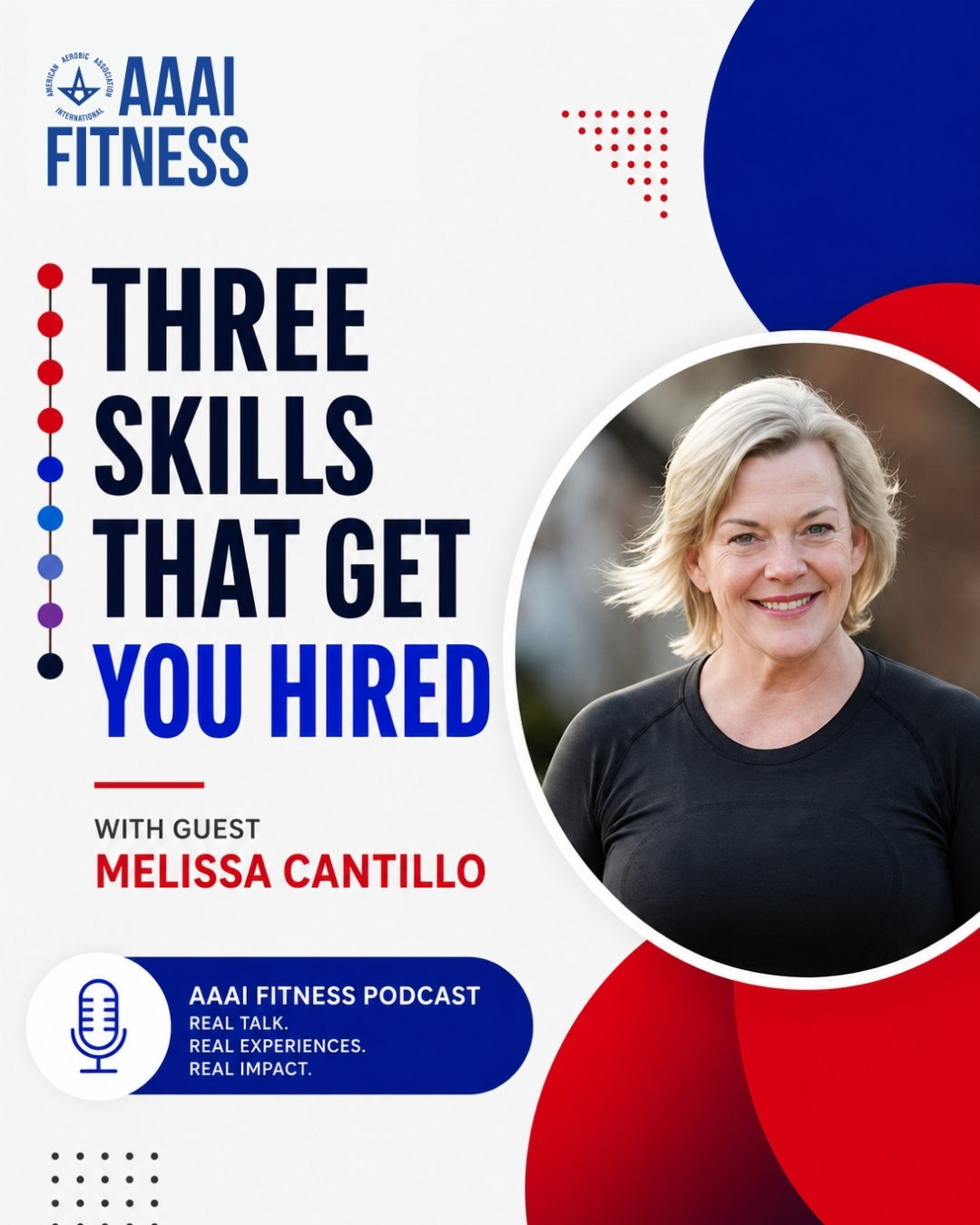
When most fitness professionals imagine their career path, they picture working in a health club, boutique studio, or training clients one-on-one. But the fitness industry is far bigger than many realize, and some of the most rewarding opportunities exist in places many trainers never consider.
Melissa Cantillo, Fitness Manager at Canyon Ranch in Lenox, Massachusetts, knows that firsthand. After years of teaching classes at multiple facilities and living what she affectionately calls the life of a “gypsy fitness instructor,” she found a career that combined her passion for movement with whole-person wellness. Today, she leads a team of fitness professionals at one of the world’s most respected wellness resorts.
Her journey offers valuable lessons for anyone looking to build a sustainable, fulfilling career in fitness.
Tip #1: Become More Than a One-Trick Pony
One of Melissa’s strongest pieces of advice is simple: don’t limit yourself to a single specialty. While it’s important to have an area of expertise, employers often need instructors who can wear multiple hats. At Canyon Ranch, instructors may teach strength training, stretching, cycling, functional fitness, pool classes, or personal training throughout the week.
As Melissa explains, someone who only teaches one format can quickly become difficult to schedule. Instead of asking, “What’s my favorite class to teach?” ask yourself, “What else can I learn?”
Expanding your skill set makes you more employable, opens doors to leadership opportunities, and creates a career that’s more resilient when industry trends inevitably change. The fitness professionals who thrive are often the ones willing to keep learning.
Tip #2: Your Personality Matters More Than Your Resume
Certifications matter. Experience matters. But Melissa believes neither outweighs genuine passion. When interviewing candidates, she’s far less interested in hearing someone list every credential they’ve earned than she is in seeing their enthusiasm for helping people.
She looks for eye contact. Energy. Coachability. Curiosity. Can this person connect with guests? Can they continue learning? Can they create an experience that makes someone feel welcome?
Melissa shared that she’d rather hire someone who’s teachable than someone who believes they already know everything. In fact, one of her most successful trainers came into Canyon Ranch with very little industry experience. What stood out wasn’t his resume, but his willingness to learn. After extensive mentoring, he became one of their top-performing trainers.
Technical skills can be taught. Character, humility, and a genuine desire to help others are much harder to develop.
Tip #3: Build a Career, Not Just a Schedule
Many fitness professionals spend years driving from club to club, teaching scattered classes while piecing together enough work to make a living. Melissa lived that reality herself. Eventually, she realized she wanted something more sustainable.
At Canyon Ranch, she found consistent hours, benefits, paid time off, professional development, and a collaborative team environment. It transformed not only her career but also her quality of life. Her advice is to think beyond simply filling your weekly schedule.
Instead, ask yourself:
Where can I continue growing?
Does this organization invest in its people?
Am I building a career that I can enjoy for years?
Long-term success isn’t just about teaching more classes. It’s about finding an environment that supports your professional and personal wellbeing.
Success Is Bigger Than the Gym Floor
Perhaps the most refreshing part of Melissa’s perspective is what she doesn’t focus on. She doesn’t care what size someone is. She doesn’t expect perfection. She isn’t looking for the loudest voice or the most impressive social media following. She’s looking for people who genuinely care about others, love learning, and want to make a positive difference every day.
The fitness industry needs professionals who bring knowledge, empathy, and authenticity to every interaction. Whether your dream job is at a luxury wellness resort, a community recreation center, or your own personal training business, those qualities never go out of style.
As Melissa encourages aspiring professionals: don’t wait until you feel “ready.” Start learning. Keep growing. Expand your skills. The opportunities waiting for you may be far beyond the walls of the traditional gym.
Every instructor has a different path into the fitness industry. Some start by earning certifications before ever stepping into the studio. Others discover their passion after years in another career. For Felix Ojeda, founder of Palango Fitness, it started with...
If you love movement, music, and motivating others, group fitness is the perfect path to channel your passion. But enthusiasm alone isn’t enough to lead safe, effective, and unforgettable classes. That’s where a Group Fitness Instructor Certification comes in—and here...
You are worried your clients are bored. That is why you keep changing every session, rotating new exercises, and refreshing routines that were working just fine. You tell yourself you are keeping things fresh. You tell yourself variety is the point. Here is the secret...
At AAAI Fitness, we believe great classes are about more than exercises, sets, and movement patterns. Every class is an opportunity to create an experience that leaves participants feeling empowered, connected, and eager to return. While technical knowledge and sound programming are essential, the most memorable instructors understand that lasting impact comes from how they make people feel.
Whether you’re teaching active agers, beginners, or lifelong exercisers, the difference between a good class and an unforgettable one often comes down to the details. Here are five ways to elevate your classes and create experiences that keep participants engaged for years to come.
1. Master the Fundamentals First
Before you can create memorable experiences, you need a strong foundation. Effective instructors understand exercise science, movement mechanics, safety considerations, and program design. They know how to offer modifications, progressions, and regressions that meet participants where they are.
When you feel confident in your knowledge and class structure, you create space to focus on participant engagement, connection, and creativity. A strong foundation allows you to be fully present rather than worrying about what’s coming next.
2. Use Language That Encourages and Empowers
The words you choose can dramatically influence how participants experience your class. Positive, inclusive language helps individuals feel capable and supported regardless of their fitness level or physical ability.
Instead of focusing on limitations, emphasize possibilities. Replace judgment with encouragement. Use cues that help participants feel successful while reinforcing their autonomy and confidence. Thoughtful communication fosters trust, and trust is the cornerstone of participant retention.
3. Make Transitions Part of the Experience
Transitions are often overlooked, but they can significantly impact the flow and comfort of a class. Smooth transitions help participants feel safe, organized, and confident throughout the workout.
Whether you’re moving from standing exercises to seated work, changing equipment, or shifting intensity levels, clear and intentional transitions reduce uncertainty and maintain momentum. For active aging populations in particular, well-planned transitions can improve both safety and enjoyment.
4. Build Community Through Connection
People may initially attend for fitness, but they often stay because of the relationships they develop. Creating opportunities for connection transforms a class from a workout into a community.
Simple actions such as greeting participants by name, celebrating milestones, encouraging interaction, and acknowledging individual successes help foster a sense of belonging. When participants feel connected to the instructor and to one another, attendance becomes about more than exercise. It becomes part of their lifestyle.
5. Inspire More Than Physical Change
Exercise has the power to improve strength, balance, mobility, and cardiovascular health. It can also improve confidence, resilience, and overall well-being.
Take opportunities to share messages that encourage healthy habits, positive thinking, and personal growth. A brief reminder about perseverance, gratitude, consistency, or self-care can resonate far beyond the class itself. These moments help participants connect their physical efforts to a larger purpose and remind them of the value they bring to their own wellness journey.
The Bottom Line
Exceptional classes are built on a combination of science, strategy, and human connection. While exercise programming matters, the experiences you create are what participants remember most.
As fitness professionals, we have the opportunity to do more than lead workouts. We can inspire confidence, foster community, and create environments where people feel stronger, healthier, and more connected.
The most memorable classes aren’t simply measured by calories burned or repetitions completed. They’re measured by the positive impact they have on the lives of the people who attend them.
Every instructor has a different path into the fitness industry. Some start by earning certifications before ever stepping into the studio. Others discover their passion after years in another career. For Felix Ojeda, founder of Palango Fitness, it started with...
If you love movement, music, and motivating others, group fitness is the perfect path to channel your passion. But enthusiasm alone isn’t enough to lead safe, effective, and unforgettable classes. That’s where a Group Fitness Instructor Certification comes in—and here...
You are worried your clients are bored. That is why you keep changing every session, rotating new exercises, and refreshing routines that were working just fine. You tell yourself you are keeping things fresh. You tell yourself variety is the point. Here is the secret...
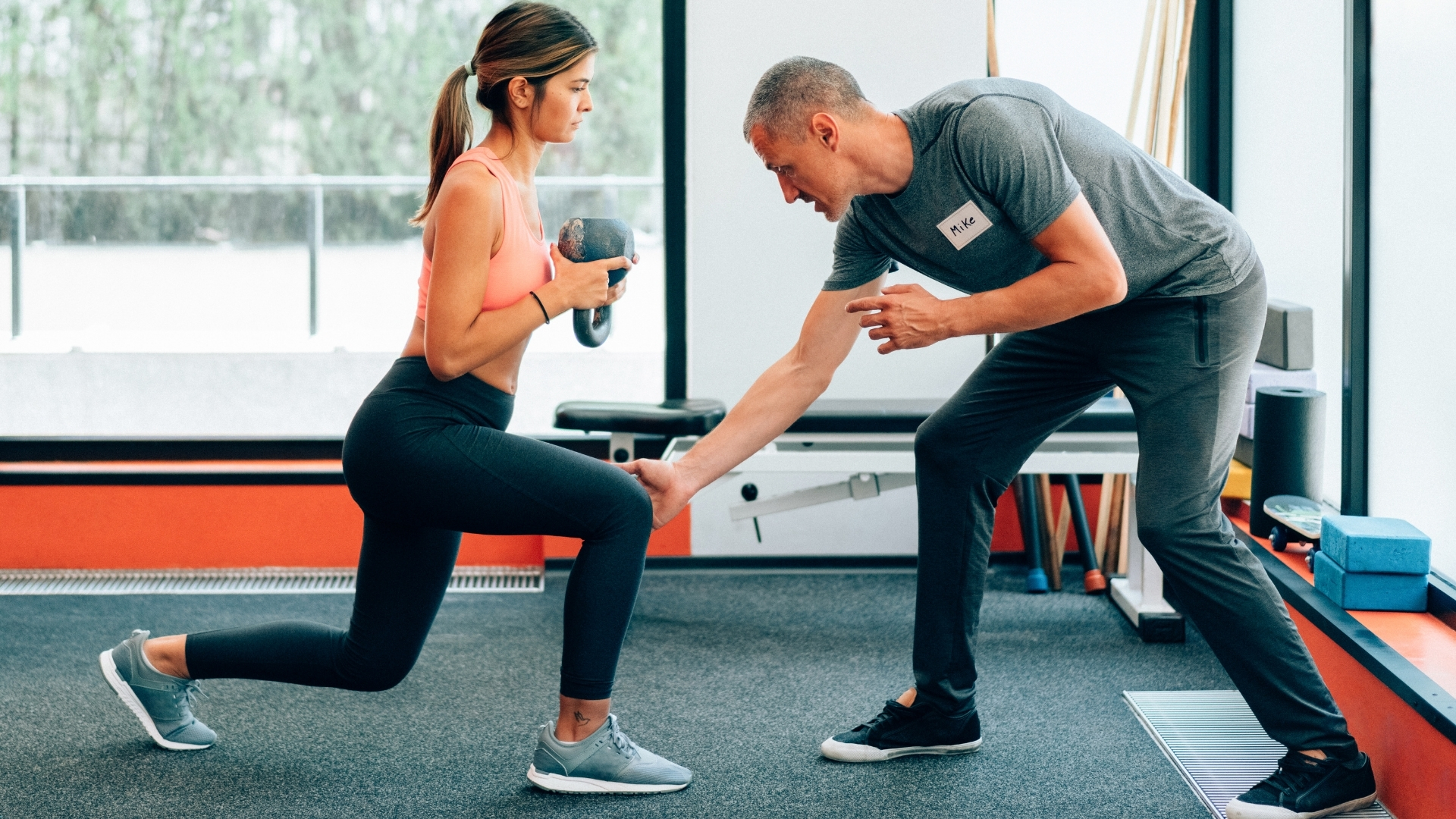
Most gym etiquette articles are written for members. This one is not. Personal trainers and group fitness instructors work under a higher standard because they are not just using the gym. They are working in it. They are being paid in a shared space, representing a facilities brand, influencing client experience, and shaping the gym culture around them.
This guide covers 21 common gym etiquette situations for fitness professionals. Some apply general gym-floor rules to trainers. Others reflect the added responsibility that comes with coaching clients and leading group fitness classes. These standards help separate average fitness professionals from those people trust, respect, and recommend.
21 Gym Etiquette Rules for Personal Trainers and Group Fitness Instructors
1. Arrive Early and Prepare Your Space
A trainer should arrive before the client, not with them and definitely not after them. That time is there to check equipment, scan the floor, adjust the workout if needed, and be fully ready when the client walks in.
If your client arrives and you are still looking for a bench, the session has already started badly.
Professional Standard
Arrive 10 to 15 minutes early.
Check equipment.
Prepare your space.
Adapt the session to what is actually available.
What to Avoid
Do not save multiple stations with towels or equipment.
Do not ask members to give up equipment for your client.
Your program should adapt to the gym floor, not the other way around.
2. Re-Rack Weights and Clean Up Completely
After the session ends, there should not be a loaded barbell, dumbbells on the floor, bands hanging around, or a sweaty mat left behind.
As a trainer, your cleanup standard should be higher than the average member’s.
Professional Standard
Build cleanup time into every session.
Re-rack weights properly.
Wipe down used surfaces.
Return equipment where it belongs.
What to Avoid
Do not leave a mess because you are rushing to your next appointment.
Cleanup is part of the session.
3. Manage Gym Floor Space Fairly
A shared gym floor is not your private training studio. Problems start when trainers spread out too far, set up giant circuits, or act like other members are in the way.
Professional Standard
Keep your setup tight and efficient.
During busy hours, use only the space you need.
Be ready to adjust when necessary.
What to Avoid
Do not run complicated circuits during peak times.
Do not tell clients to guard equipment while you move elsewhere.
Do not make members feel like they are interrupting your session.
4. Control Your Noise Level
Your voice carries in a gym. Coaching requires instruction and encouragement, but there is a difference between effective communication and turning your session into a performance.
Professional Standard
Coach at a normal conversational volume.
Stay close enough to your client that you do not need to shout.
What to Avoid
Do not count reps loudly across the room.
Do not shout routine encouragement just to sound energetic.
Do not use a performance voice to impress the room.
5. Correct Client Form Professionally
If a client needs technical correction, do it in a way that protects their dignity and keeps their confidence intact.
Professional Standard
Step closer.
Speak calmly.
Use one clear cue at a time.
Make corrections privately whenever possible.
What to Avoid
Do not shout corrections from across the room.
Do not repeat the same cue over and over if it is not working.
Find a better cue.
6. Stay Focused on Your Client
During a paid session, your attention belongs to the client.
Professional Standard
Acknowledge others briefly if needed.
Return your focus to the client immediately.
What to Avoid
Do not chat with staff, members, or other trainers while the client waits.
Do not leave a client alone during a session to socialize.
7. Limit Phone Use During Sessions
Phones are useful for timers, notes, and tracking workouts. Clients can tell the difference between professional use and distraction.
Professional Standard
Use your phone only when it directly supports the training session.
What to Avoid
Do not text.
Do not scroll social media.
Do not check notifications during coaching.
Do not take personal calls unless it is an emergency.
Do not film clients without prior consent.
8. Use Facility Areas Appropriately
Just because an area is open does not mean it is the right place to run a long training session.
Professional Standard
Use each area as intended.
Follow gym policies.
Choose setups that create minimal disruption.
What to Avoid
Do not occupy high-demand areas for an entire session during busy hours.
Do not coach in hallways, entrances, or spaces that create safety concerns.
9. Maintain Professional Hygiene and Appearance
Personal training is close-contact work. Hygiene and appearance matter.
Professional Standard
Wear clean, professional attire.
Use deodorant.
Stay groomed.
Freshen up between sessions when needed.
What to Avoid
Do not wear strong cologne or perfume.
Do not re-wear unwashed training clothes.
Do not ignore how your presentation affects the client experience.
10. Never Solicit Clients on the Gym Floor
Seeing a potential client does not give you permission to interrupt their workout.
Professional Standard
Build your business through quality coaching, referrals, and proper consultation channels.
What to Avoid
Do not approach another trainer’s client.
Do not disguise sales tactics as helpful advice.
Do not undermine coworkers.
11. Maintain Professional Boundaries
Training relationships can become personal quickly. Boundaries must remain clear.
Professional Standard
Be warm, respectful, and consistent.
Keep sessions focused on client goals and well-being.
What to Avoid
Do not allow sessions to become unpaid therapy.
Do not overshare your personal life.
Do not create favorites.
Do not date current clients.
12. Stay Within Your Scope of Practice
Clients may ask questions that fall outside your qualifications.
Professional Standard
Refer out when necessary.
Stay within your expertise.
Adjust training conservatively.
What to Avoid
Do not diagnose injuries.
Do not interpret medical scans or lab results.
Do not provide individualized nutrition advice unless legally qualified.
13. Do Not Give Unsolicited Advice
Poor technique does not automatically make it your responsibility to intervene.
Professional Standard
Step in only when there is an immediate safety concern.
What to Avoid
Do not use advice as a sales strategy.
Do not hand out business cards after giving unrequested coaching.
14. Respect Other Trainers
Not every trainer coaches the same way you do.
Professional Standard
Share space fairly.
Handle disagreements professionally.
Treat coworkers with respect.
What to Avoid
Do not badmouth another trainer or member.
Do not create territorial conflicts over equipment.
15. Be Punctual
Running late sends the message that your time matters more than the client’s.
Professional Standard
Start on time.
End on time.
Leave transition time between appointments.
What to Avoid
Do not start late without acknowledging it.
Do not regularly run over sessions.
Do not overschedule your day.
16. Handle Emotional Moments Professionally
Clients sometimes become discouraged, emotional, or overwhelmed.
Professional Standard
Lower your voice.
Acknowledge their feelings.
Adjust the session appropriately.
Move to a quieter area if needed.
What to Avoid
Do not ignore obvious distress.
Do not force the workout forward.
Do not become the client’s therapist.
17. Prepare Before Group Fitness Class
If participants arrive while you are still setting up, you are already behind.
Professional Standard
Arrive 15 to 20 minutes early.
Set up equipment.
Test music and technology.
Greet participants.
What to Avoid
Do not prepare the room while members are arriving.
Do not ignore newcomers because you are still organizing.
18. Coach All Fitness Levels
A class often includes both beginners and experienced participants.
Professional Standard
Build modifications and progressions into every workout.
Present all options as equally valid.
What to Avoid
Do not single out participants for modifications.
Do not design classes for only one fitness level.
19. Stay Engaged After Class
The class experience does not end when the final song stops.
Professional Standard
Stay available for a few minutes after class.
Answer questions.
Help reset the room.
What to Avoid
Do not leave immediately after class.
Do not leave cleanup to participants.
Do not block room turnover with long conversations.
20. Represent the Profession at All Times
Even when you are off the clock, people still recognize you as a fitness professional.
Professional Standard
Demonstrate courtesy and professionalism at all times.
Be consistent in how you conduct yourself.
What to Avoid
Do not complain about clients, staff, or management where members can hear.
Do not act differently when you think nobody is watching.
21. Respect Privacy When Filming
Content creation is common in fitness, but privacy should always come first.
Professional Standard
Follow facility policies.
Obtain clear consent before filming clients.
Be mindful of who appears in the background.
Choose filming locations and times that respect others.
What to Avoid
Do not film people without their knowledge or consent.
Do not block equipment, walkways, or shared spaces with cameras.
Do not assume filming is allowed everywhere.
Do not film in locker rooms, changing rooms, showers, or restrooms.
Final Thoughts
For personal trainers and group fitness instructors, gym etiquette is not optional.
People notice the small things. They notice whether you clean up after sessions, respect shared equipment, stay focused on clients, and act professionally under pressure. Over time, those everyday habits shape your reputation far more than most trainers realize.
Professionalism is built in the moments between the workouts.
Ready to take the next step in your career? AAAI Fitness certifications help personal trainers and group fitness instructors build practical knowledge, professional credibility, and real-world coaching skills.
Written by Joe Cannon, MS, a fitness educator with over 30 years of experience hiring, training, and mentoring personal trainers in commercial gyms and private facilities.
Every instructor has a different path into the fitness industry. Some start by earning certifications before ever stepping into the studio. Others discover their passion after years in another career. For Felix Ojeda, founder of Palango Fitness, it started with...
If you love movement, music, and motivating others, group fitness is the perfect path to channel your passion. But enthusiasm alone isn’t enough to lead safe, effective, and unforgettable classes. That’s where a Group Fitness Instructor Certification comes in—and here...
You are worried your clients are bored. That is why you keep changing every session, rotating new exercises, and refreshing routines that were working just fine. You tell yourself you are keeping things fresh. You tell yourself variety is the point. Here is the secret...
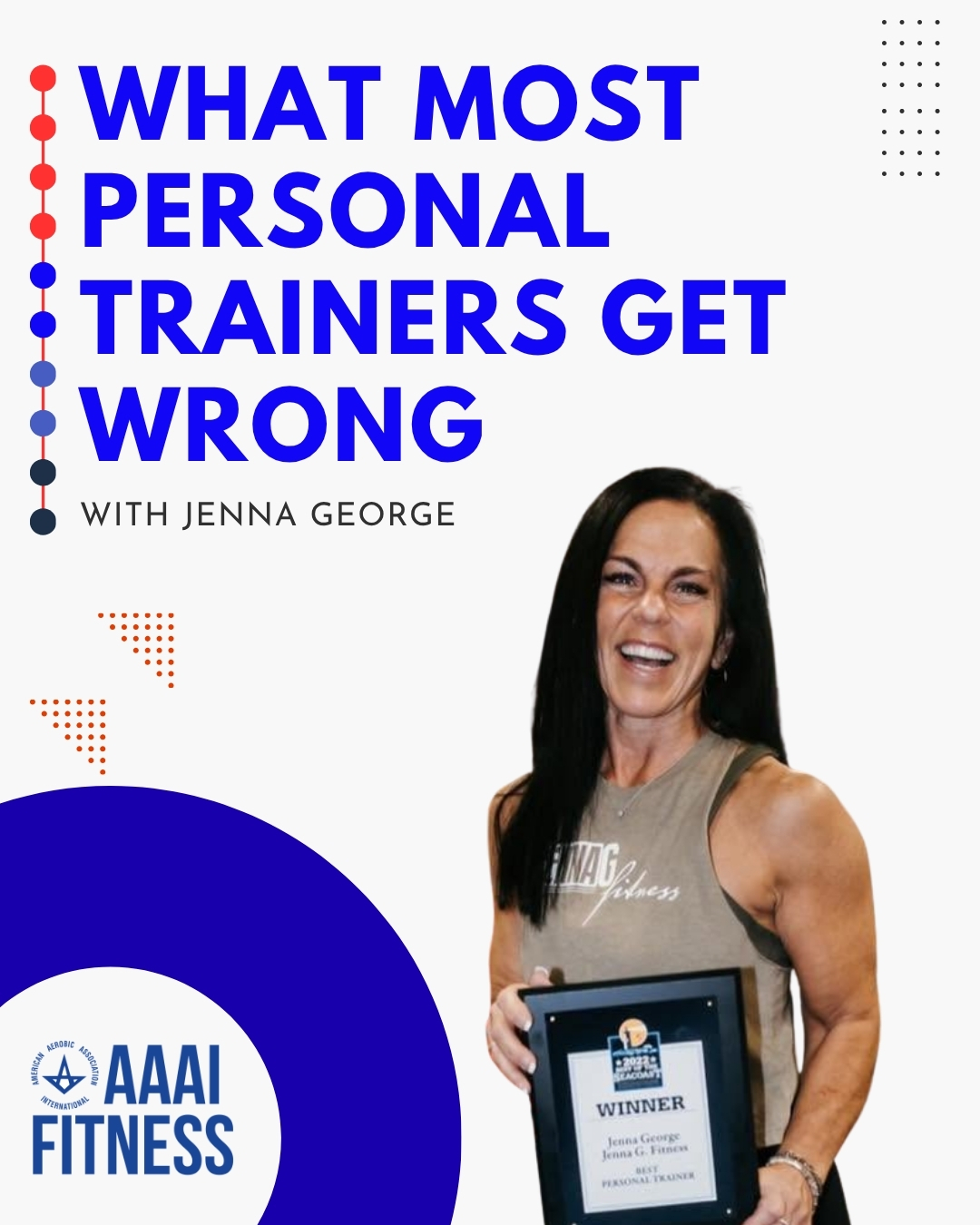
Thirty years in the fitness industry will teach you a thing or two. Jenna George of Jenna G Fitness has done it all — group fitness, personal training, bodybuilding prep, virtual coaching, and everything in between. And the wisdom she’s picked up along the way? It’s exactly the kind of real talk that new and experienced fit pros need to hear.
Here are three things Jenna wants every personal trainer to know.
1. It’s a Relationship Business — Not a Science Experiment
You studied the textbooks. You passed the test. You know your anatomy, your physiology, and your program design. But here’s the thing — none of that is what will make or break your career.
Jenna learned this lesson early, and she hasn’t forgotten it.
“It’s a relationship. It’s a relationship industry. And that’s really what it’s all about at the end of the day. It’s not all the exercise science stuff that you learn in the big thick books.”
The most successful fit pros build trust before they build programs. They show up, they listen, and they become a genuine part of their clients’ lives. Jenna’s first two clients taught her that within the first 8 to 12 weeks — one a twenty-something guy managing work stress, the other a woman in her mid-40s navigating perimenopause. Two completely different worlds. One common thread: the emotional connection is what made the difference.
If you’re waiting for clients to come to you because of your credentials, you’re going to be waiting a long time. Get in the gym. Talk to people. Be present. Let them get to know you before they ever ask about your rates.
2. Stop Making It About You — Make It About Them
Social media is a powerful tool for personal trainers. But Jenna has noticed a troubling trend: too many trainers are using it to showcase themselves instead of their clients.
“It’s not about my clients. They’re the celebration. We’re not celebrating me. We’re celebrating what I’m getting them to do.”
Posting your personal workout, your deadlift PR, or your perfectly lit training reel might feel like marketing — but it’s not solving anyone’s problem. Jenna puts it simply: watching a trainer do a bench press isn’t going to make someone hire them. What WILL make someone hire you is seeing you work with someone who looks like them, has goals like theirs, and is getting real results.
Showcase your clients. Celebrate their wins. Solve problems in your content. Answer the questions your ideal client is already asking. That’s the kind of social media presence that builds a business — not a highlight reel.
3. Set Your Boundaries Early — And Stick to Them
One of the biggest mistakes new trainers make is being so eager to fill their schedule that they say yes to everything and everyone. Jenna has been there, and she learned the hard way that boundaries aren’t just good for your mental health — they’re good for your business.
“You’re eager to get clients. You’re eager to fill up your schedule. But don’t find yourself in a situation where you’re taking a 5 a.m. client at this club, but you’ve got to get over to a 9 a.m. client at this club and then you’re coming back.”
Set your hours. Enforce your cancellation policy. Decide when you’re available for texts and emails — and communicate that clearly. Jenna doesn’t take texts before 8 a.m. or after 8 p.m., and she built that into her client agreement. Not because she doesn’t care, but because she knows that a burned-out trainer can’t show up fully for anyone.
The trainers who last in this industry are the ones who protect their energy as fiercely as they protect their clients’ goals.
Jenna George has been doing this for three decades and she’s still learning, still growing, and still showing up every single day for her clients. That’s the kind of career worth building.
🎥 Watch the full interview below and hear more of Jenna’s story — including how she got her start, what it’s really like to coach bodybuilders, and the marketing tip she swears by.
Find Jenna on Instagram, Facebook, YouTube, and LinkedIn at @JennaGFit
Every instructor has a different path into the fitness industry. Some start by earning certifications before ever stepping into the studio. Others discover their passion after years in another career. For Felix Ojeda, founder of Palango Fitness, it started with...
If you love movement, music, and motivating others, group fitness is the perfect path to channel your passion. But enthusiasm alone isn’t enough to lead safe, effective, and unforgettable classes. That’s where a Group Fitness Instructor Certification comes in—and here...
You are worried your clients are bored. That is why you keep changing every session, rotating new exercises, and refreshing routines that were working just fine. You tell yourself you are keeping things fresh. You tell yourself variety is the point. Here is the secret...
There’s a question that separates the good from the great in the fitness industry. It’s not about your certification. It’s not about your Instagram following. It’s not even about how many clients you have.
It’s this: Are you still showing up to learn?
The most successful fitness professionals in the industry have one thing in common. They never stop being students. They attend conferences. They seek out mentors. They put themselves in rooms with people who challenge their thinking and push their craft forward. And then they take what they learn and they show up even better for their clients.
It sounds simple. But it’s rarer than you think.
The Comfort Zone Is a Career Killer
It’s easy to get comfortable. You’ve got your clients. You’ve got your programming. You’ve got your routine. And routine feels safe.
But the fitness industry doesn’t stand still. New research emerges. New tools hit the market. Client expectations evolve. The trainer who was ahead of the curve five years ago can quickly fall behind if they stop investing in their education.
The best fit pros know this. And it’s why they keep showing up — year after year — to events, conferences, and workshops that challenge everything they think they know.
What Showing Up Actually Looks Like
Showing up isn’t just about physically being in the room. It’s about being present, being open, and being willing to be a beginner again even when you’re an expert.
It looks like a trainer with 20 years of experience sitting in a workshop and taking notes like it’s their first day. It looks like a new fit pro nervously walking into a networking lunch and leaving with three new colleagues and a mentor. It looks like someone who drove four hours to a conference, stayed in a hotel room they stretched their budget for, and came home on fire with ideas that transformed their business.
That’s what showing up looks like. And it changes careers.
The Connections You Can’t Get Online
Here’s something the most successful fit pros will tell you — almost every major opportunity in their career came from a person, not a search engine.
A referral from someone they met at a conference. A collaboration that started over lunch at an expo. A mentor who pulled them aside after a session and changed the way they thought about their work forever.
You cannot manufacture those moments online. They happen in person. They happen when you show up.
What One World Offers You
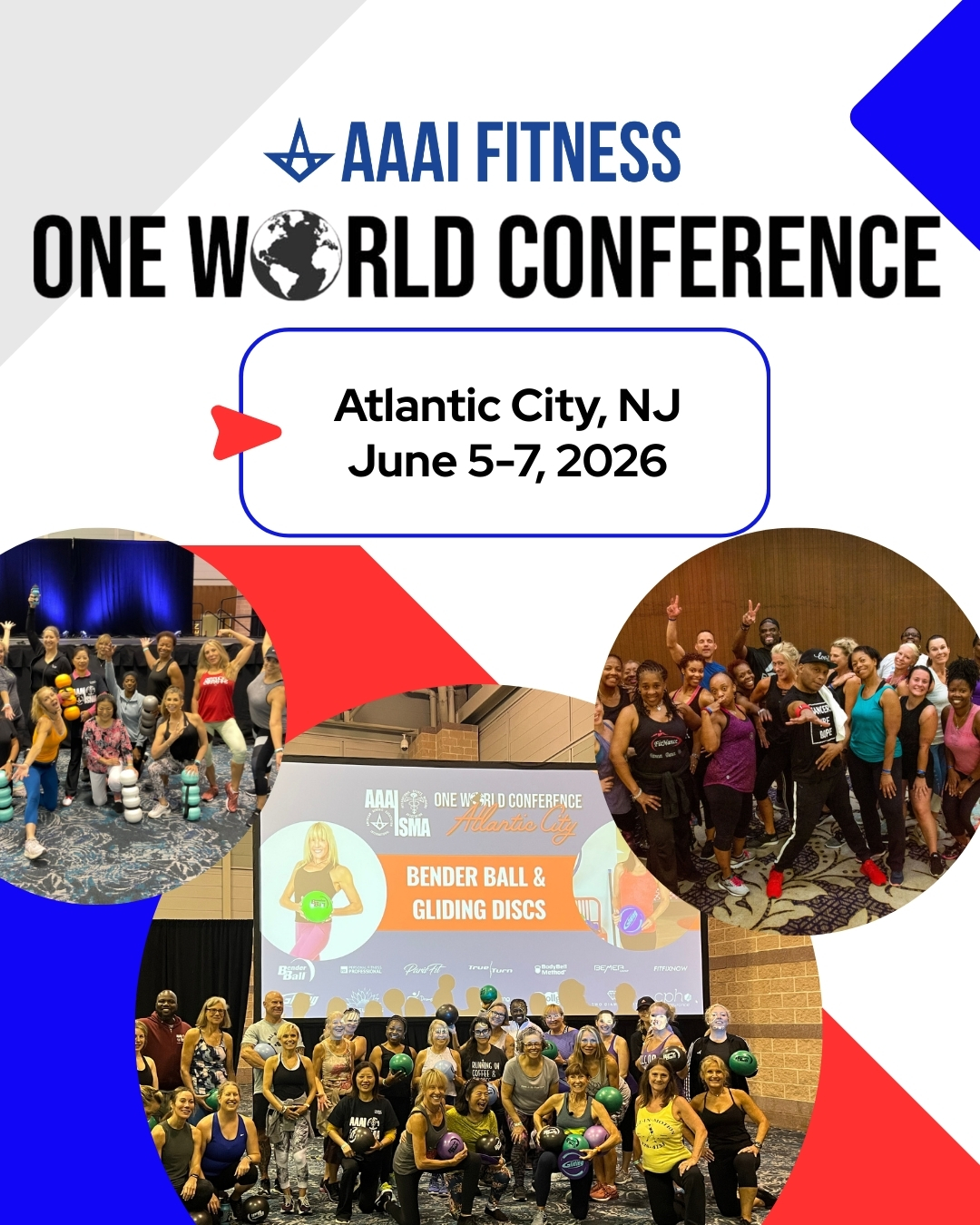
The AAAI Fitness One World Conference in Atlantic City this June 5–7 is exactly the kind of room the most successful fit pros put themselves in.
Three days of hands-on certifications, workshops, and sessions led by some of the most respected names in the fitness industry. An expo floor full of the products and companies shaping the future of fitness. And hundreds of fellow fit pros who love this industry just as much as you do.
This is where careers are built. This is where ideas are born. This is where the best in the business come to get better.
The Choice Is Yours
You can keep doing what you’re doing. And maybe that’s working just fine.
Or you can show up. You can invest in yourself, your skills, and your career in a way that pays dividends for years to come. You can be the fit pro who never stops learning — because that’s exactly the kind of trainer clients want to work with, refer their friends to, and stay loyal to for life.
The most successful fit pros don’t wait for the perfect moment. They make the moment by showing up.
Will you show up this June?
🎟️ Register now and join us at the One World Conference in Atlantic City.
📅 June 5–7, 2026 📍 Atlantic City Convention Center, NJ 🏨 Sheraton Atlantic City — connected via skywalk
Every instructor has a different path into the fitness industry. Some start by earning certifications before ever stepping into the studio. Others discover their passion after years in another career. For Felix Ojeda, founder of Palango Fitness, it started with...
If you love movement, music, and motivating others, group fitness is the perfect path to channel your passion. But enthusiasm alone isn’t enough to lead safe, effective, and unforgettable classes. That’s where a Group Fitness Instructor Certification comes in—and here...
You are worried your clients are bored. That is why you keep changing every session, rotating new exercises, and refreshing routines that were working just fine. You tell yourself you are keeping things fresh. You tell yourself variety is the point. Here is the secret...
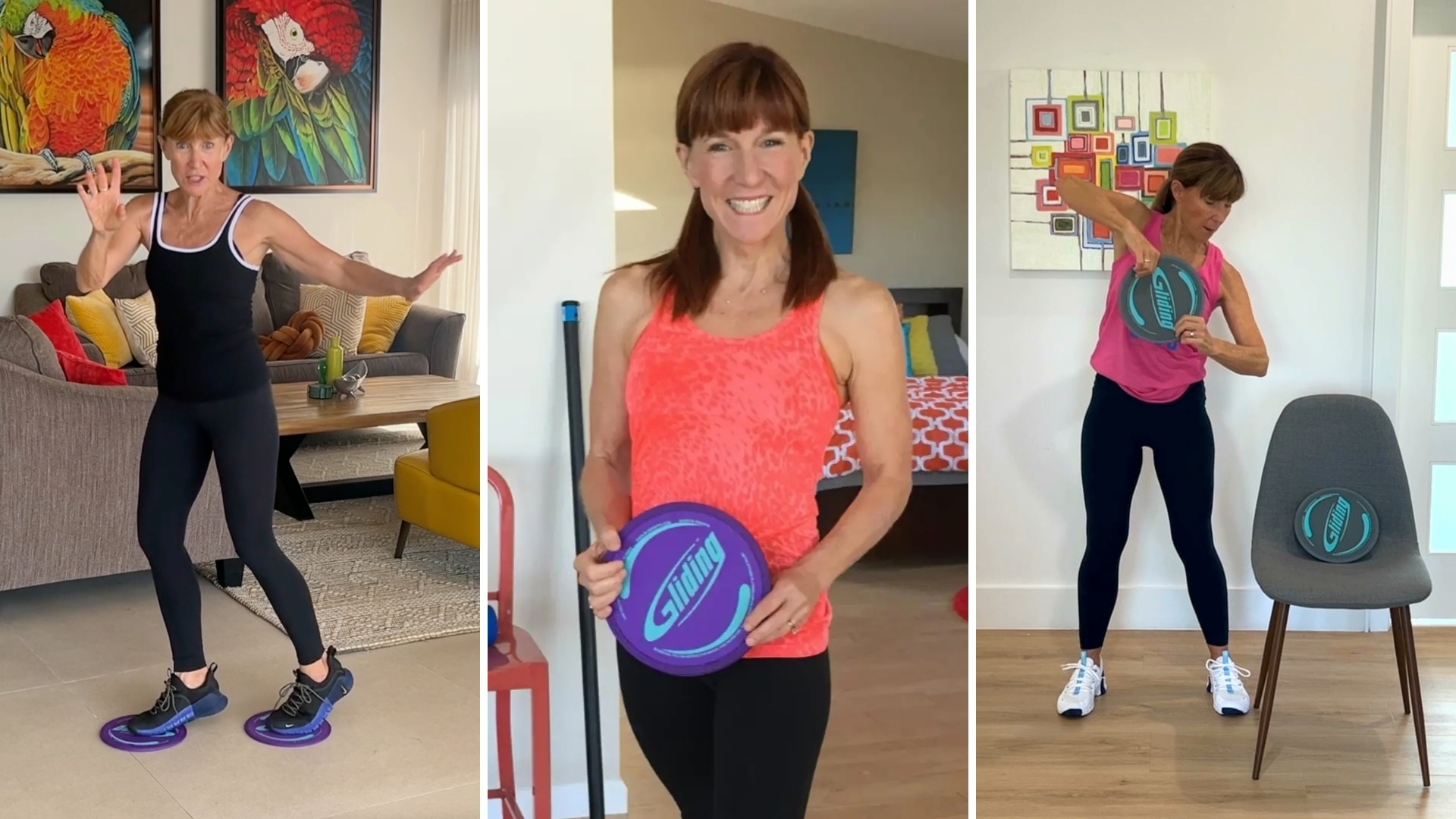
Gliding Discs may seem like simple tools, but they offer significant benefits for various fitness levels. This portable and versatile equipment can increase intensity, engage muscles differently, and enhance stability during workouts. From improving strength to adding variety to your exercise routine, gliding discs are a powerful addition to any fitness program.
1. Low Impact, High Engagement
One of the primary benefits of Gliding Discs is their ability to deliver a low-impact workout that’s easy on the joints yet highly effective. Unlike exercises that lift your feet off the ground, gliding discs allow you to maintain contact with the floor, reducing stress on your knees, hips, and ankles. This makes them ideal for people who need to minimize joint stress, whether due to injury, age, or personal preference.
Gliding Discs require significant muscle engagement despite their low impact, particularly of the stabilizing muscles. As you slide in and out of different movements, your core, hips, and other stabilizers must control the motion, strengthening these often underused muscles. This not only improves overall strength but also enhances balance and coordination.
2. Increased Core Activation
The Gliding motion required for Gliding Discs makes them an excellent tool for core workouts. Whether you’re performing mountain climbers, plank variations, or Gliding lunges, controlling your body through dynamic movements forces your core muscles to work harder. Unlike traditional static exercises, gliding discs require continuous core engagement, particularly the deeper stabilizing muscles such as the transverse abdominis.
For example, a traditional mountain climber performs without sliders, focusing on hip flexion and extension. But when you introduce Gliding Discs, the movement becomes smoother, and you must use your core muscles to control the Gliding motion, amplifying the challenge. This increased engagement makes it easier to develop a strong and stable core, essential for overall fitness, injury prevention, and improved posture.
3. Versatility and Full-Body Workouts
Gliding Discs are incredibly versatile and can be incorporated into nearly any type of workout—strength training, HIIT, Pilates, or even yoga. With just a small pair of discs, you can perform various exercises that target the entire body.
For lower-body strength, you can use Gliding Discs for lunges, squats, and hamstring curls. These exercises take on new dimensions with Gliding Discs, as they introduce an element of instability that requires greater focus on form and balance. In the upper body, exercises like Gliding push-ups or chest flies challenge your muscles in new ways, forcing them to stabilize while moving through a wider range of motion.
For example, a Gliding lunge requires you to focus on the lunge movement and control the leg gliding on the floor. This adds a stability challenge to your core and engages muscles throughout the body, making a simple exercise more dynamic and effective.
4. Engages Multiple Muscle Groups Simultaneously
Using Gliding Discs challenges multiple muscle groups simultaneously, helping you build strength and endurance more efficiently. For example, during a Gliding lunge, you’ll work your quads and glutes and engage your hamstrings, calves, and core for stabilization. This multi-muscle activation helps you get the most out of each exercise, making your workouts more efficient and effective.
Since Gliding Discs engage stabilizer muscles and primary movers, they’re excellent for building functional strength that translates to real-world activities. This is especially beneficial for athletes and anyone looking to improve their overall movement quality.
Gliding Discs may be small, but they pack a powerful punch to enhance your fitness routine. Whether you’re looking for low-impact, joint-friendly options or want to challenge your strength and stability, these discs offer a versatile and effective solution. By incorporating them into your workouts, you’ll improve core strength, increase flexibility, engage multiple muscle groups, and enjoy a convenient, full-body workout that’s fun and challenging.
Ready to expand your knowledge of what Gliding Discs can do? Mindy Mylrea, the creator of the Gliding Discs, will be leading a 4-hour workshop on Friday from 1-4pm at the One World Conference. Register today to save your spot!
Every instructor has a different path into the fitness industry. Some start by earning certifications before ever stepping into the studio. Others discover their passion after years in another career. For Felix Ojeda, founder of Palango Fitness, it started with...
If you love movement, music, and motivating others, group fitness is the perfect path to channel your passion. But enthusiasm alone isn’t enough to lead safe, effective, and unforgettable classes. That’s where a Group Fitness Instructor Certification comes in—and here...
You are worried your clients are bored. That is why you keep changing every session, rotating new exercises, and refreshing routines that were working just fine. You tell yourself you are keeping things fresh. You tell yourself variety is the point. Here is the secret...
We get it. Life is busy. Money is real. Time off isn’t always easy to come by. And with so many online courses, webinars, and virtual certifications available at the click of a button — it’s easy to talk yourself out of showing up in person.
But before you close that registration tab, we want to have an honest conversation with you. Because we’ve heard every objection in the book, and we have some thoughts.
“It’s too expensive.”
Let’s reframe this one. The One World Conference isn’t an expense — it’s an investment. One new client who finds you because of a certification you earned at One World? That pays for your ticket. One connection you make at the expo that opens a door you didn’t even know existed? Priceless.
The real question isn’t whether I can afford to go. It’s can I afford not to?
“I can just take an online course.”
You absolutely can. And online learning has its place. But here’s what you can’t get from your couch:
You can’t feel the TrueTurnPro or Gliding Discs in your hands for the first time and have that “oh my god” moment. You can’t ask a presenter a follow-up question in real time. You can’t grab lunch with someone who becomes your next collaborator, accountability partner, or best industry friend.
Online is convenient. One World is transformational. Those are two very different things.
“I don’t have time.”
Three days. That’s it. Three days that could redirect the entire trajectory of your career. The certifications you earn, the people you meet, and the ideas you bring home don’t expire when the conference ends — they compound over time.
You make time for what matters. And your career matters.
“I don’t know if it’s the right fit for me.”
Whether you’re brand new to the industry or you’ve been training clients for 20 years — One World was built for you. New fit pros can get certified and launch their careers with confidence. Veterans can discover new tools, fresh perspectives, and cutting-edge education that keeps them ahead of the curve. There is truly something for everyone across all three days.
If you work in fitness — this is your conference.
“I’ll go next year.”
We hear this one a lot. And every year, the people who said “next year” last year show up and tell us they wish they hadn’t waited.
Spots are limited. The presenters are confirmed. The schedule is packed. The only thing missing is you.
The Bottom Line
You found this page for a reason. Something told you to look into it. That instinct? Trust it.
The One World Conference is three days of hands-on education, world-class presenters, specialty certifications, and a community of fitness professionals who love this industry just as much as you do. It happens once a year. In Atlantic City. This June.
Don’t let another year go by wondering what you missed.
Every instructor has a different path into the fitness industry. Some start by earning certifications before ever stepping into the studio. Others discover their passion after years in another career. For Felix Ojeda, founder of Palango Fitness, it started with...
If you love movement, music, and motivating others, group fitness is the perfect path to channel your passion. But enthusiasm alone isn’t enough to lead safe, effective, and unforgettable classes. That’s where a Group Fitness Instructor Certification comes in—and here...
You are worried your clients are bored. That is why you keep changing every session, rotating new exercises, and refreshing routines that were working just fine. You tell yourself you are keeping things fresh. You tell yourself variety is the point. Here is the secret...
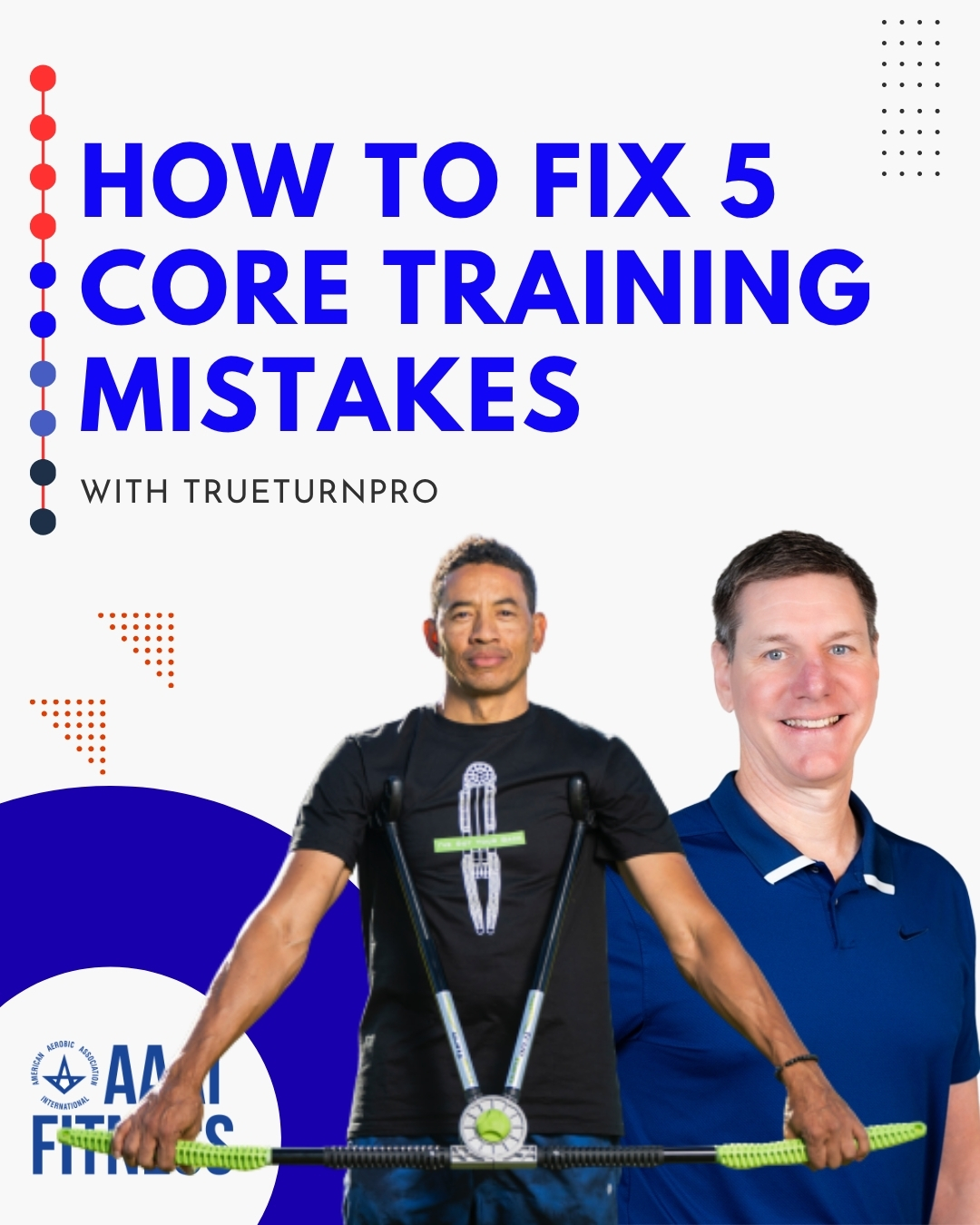
Rotation is one of the most fundamental movements in the human body — and one of the most misunderstood in the fitness industry. We sat down with Carl Horne, former NBA strength and conditioning coach and founder of TrueTurnPro, and John Preston, MS, CSCS, Director of Education at TrueTurnPro, to talk about what trainers are getting wrong, what they should be focusing on, and why rotation is the missing piece in most training programs. Here are five takeaways every fit pro needs to hear.
1. Your Clients Are Rotating Every Day — Just Not the Right Way
Most people think of rotation as an exercise. Carl and John want you to think of it as a survival skill.
“You can’t brush your teeth, walk your dog, drive your car, go to the grocery store without rotation. You rotate whatever step you take.” — Carl Horne
The problem? The body cheats. Arms compensate for the spine constantly — and over time, that compensation leads to immobility, dysfunction, and pain. As Carl puts it, it’s a slow ticking bomb that most trainers aren’t addressing specifically enough. If you’re not intentionally training thoracic rotation with your clients, their mobility is quietly declining no matter how much they work out.
2. The Core Is Not Just Your Abs — And Crunches Are Not a Core Exercise
This one might sting a little, but it needs to be said.
“If you were to ask any trainer to list three exercises for core training, crunches is probably going to be on most people’s list. It’s an abdominal exercise, not a core exercise.” — John Preston
John and Carl stress that the industry needs to universally redefine what the core actually is. True core function involves the muscles that move and stabilize the spine — from the shoulders to the hips. Training the abdominals in isolation does not address the thoracic spine, rotational stability, or ground force reaction. If your clients are doing crunches and calling it core work, it’s time to have a conversation.
3. Most Rotational Exercises Aren’t Actually Targeting Rotation
Here’s where things get really interesting — and a little humbling.
“The fitness industry doesn’t know how to appropriately train people in the transverse plane. Instead of teaching them how to, they have tried and they’re not wrong to try. They’re attempting to do the right thing.” — John Preston
Medicine ball wall slams, dumbbell twists, squat-and-rotate combos — these exercises look like rotation, but gravity is pulling straight down, not opposing the transverse plane. That means the resistance isn’t actually challenging the muscles you’re trying to train. John and Carl aren’t throwing shade at trainers for trying — but they are asking everyone to think more critically about where the force is actually being applied.
4. Don’t Lay Fitness on Top of Dysfunction
This is one of the most powerful coaching philosophies in the interview — and it applies to every trainer, at every level.
“The goal for me has always been, don’t lay fitness on top of dysfunction. If somebody’s presenting with low back pain, we’re not trying to figure out how to increase their bench press or their squat or their deadlift. You don’t focus on the fitness until you restore the function first.” — John Preston
Before you load a client, assess them. If something is off — tight hips, weak lower abdominals, limited thoracic mobility — address it. Carl adds that nine out of ten people he examines have hip dysfunction, particularly in the psoas, that is directly contributing to low back pain. Restoration first. Fitness second.
5. The Best Trainers Personalize — Every Single Time
When asked what separates a good personal trainer from a great one, the answer was simple and direct.
“Be mindful of the person in front of you and make sure you personalize the workout to their unique needs. The good trainer knows proper technique from improper technique. The great trainer connects with what’s appropriate.” — Carl Horne
Whether you’re working with a professional athlete or someone who can barely step down one stair, the principle is the same: meet your client where they are, assess their limitations, and design accordingly. That’s not just good coaching — that’s what builds loyalty, results, and referrals.
Want to Go Deeper?
These five tips are just the beginning. Carl and John covered thoracic spine anatomy, kinetic chain mechanics, group fitness applications, and much more in our full interview.
🎥 Watch the full interview below.
And if you’re ready to experience TrueTurnPro for yourself — not just read about it — Carl and John will both be at the AAAI Fitness One World Conference in Atlantic City, June 5–7, 2026.
They’ll be teaching hands-on workshops where you’ll feel the difference in your own hands. As John says, you can’t get that online.
Every instructor has a different path into the fitness industry. Some start by earning certifications before ever stepping into the studio. Others discover their passion after years in another career. For Felix Ojeda, founder of Palango Fitness, it started with...
If you love movement, music, and motivating others, group fitness is the perfect path to channel your passion. But enthusiasm alone isn’t enough to lead safe, effective, and unforgettable classes. That’s where a Group Fitness Instructor Certification comes in—and here...
You are worried your clients are bored. That is why you keep changing every session, rotating new exercises, and refreshing routines that were working just fine. You tell yourself you are keeping things fresh. You tell yourself variety is the point. Here is the secret...
In the fitness industry, it can feel like success is all about doing more. More classes. More certifications. More social media content. More clients. More responsibility. But growth only works when it’s built on a strong foundation. Without it, even the most ambitious efforts can stall under the weight of scattered priorities and competing demands.
Your primary group fitness certification is that foundation. It’s not just a credential—it’s your roadmap to confidence, safety, credibility, and career growth. Here’s why investing in a comprehensive certification matters more than ever for fitness professionals:
1. Build Confidence With Knowledge
Confidence is more than just showing up for class with energy. True confidence comes from knowing exactly what you’re teaching, why it works, and how to adjust it for every participant. A primary group fitness certification gives you the science behind the cues, the anatomy behind the movements, and the structure behind the class flow. When you understand why an exercise works and how to safely progress or modify it, you step onto the floor with authority. You can respond to unexpected challenges, guide participants effectively, and feel secure in your ability to lead. Confidence isn’t learned overnight—it’s earned through education and practice, and a primary certification sets that foundation.
2. Enhance Safety and Protect Your Participants
Every class you teach carries responsibility. When participants trust you with their time, energy, and bodies, you owe them more than enthusiasm—you owe them safety. A primary certification teaches you the proper biomechanics, alignment, and progression strategies to prevent injury and maximize results. You’ll learn how to assess participant readiness, adapt exercises for diverse abilities, and design programs that are both challenging and safe. In a profession where one miscue can have real consequences, this knowledge isn’t optional—it’s essential.
3. Elevate Your Professional Credibility
The fitness industry is crowded. Trends come and go, and anyone can post themselves teaching online. But a recognized primary certification sets you apart. It shows peers, employers, and clients that you’ve invested in real education, that your skills are grounded in science, and that you take your role as a fitness professional seriously. Certification communicates credibility in a way marketing alone never can. It tells the world: you aren’t just passionate—you’re prepared, qualified, and committed to excellence.
4. Support Career Growth and Long-Term Success
Finally, a primary certification opens doors. It’s the key to teaching in studios, gyms, corporate wellness programs, and community spaces. It allows you to lead workshops, mentor other instructors, and expand into new markets with authority. More importantly, it gives you a framework to keep growing without burning out. When your foundation is solid, adding specialty certifications, leadership roles, or new formats becomes intentional rather than reactive. You’re not just surviving in the industry—you’re building a career designed to last.
Choosing the right certification isn’t about checking a box. It’s about deciding what kind of professional you want to be and laying the groundwork to get there. And the best way to do that is with a live, immersive experience that lets you learn, practice, and connect with experts in real time.
Every instructor has a different path into the fitness industry. Some start by earning certifications before ever stepping into the studio. Others discover their passion after years in another career. For Felix Ojeda, founder of Palango Fitness, it started with...
If you love movement, music, and motivating others, group fitness is the perfect path to channel your passion. But enthusiasm alone isn’t enough to lead safe, effective, and unforgettable classes. That’s where a Group Fitness Instructor Certification comes in—and here...

You are worried your clients are bored. That is why you keep changing every session, rotating new exercises, and refreshing routines that were working just fine. You tell yourself you are keeping things fresh. You tell yourself variety is the point. Here is the secret...
Amock personal training interviewis where many qualified trainers lose job opportunities, not because they lack knowledge, but because they misunderstand what gyms are evaluating.
Most candidates believe they need to impress the hiring manager with intensity, creativity, or advanced exercises. This pressure hitsshy personal trainersespecially hard, even though being introverted is not a disadvantage in one-on-one coaching.
This article explainswhat a mock personal training interview really is, how gyms score candidates, what mistakes lead to rejection, and how to approach a mock client session calmly, professionally, and strategically.
Mock Personal Training Interview Explained
Amock personal training interviewis a simulated training session that gyms use to evaluate a potential new trainer’s ability to coach safely, communicate clearly, and exercise sound judgment. It is usually reserved for those who have already passed the initial sit-down job interview.
A manager or staff member plays the role of a mock client while observing how the fitness instructor structures a session, selects exercises, and responds in real time. Intensity and creativity are not the primary focus.
What Is a Mock Personal Training Interview?
A mock personal training interview is ahands-on hiring assessmentcommonly used by commercial gyms, private studios, and training facilities.
It may also be called:
a mock client session
a mock training session
a practical interview
a practical exam
During this meeting, you are asked to coach a short session while being observed. The purpose is not to test your physical fitness or creativity. It is to determine whether you can safely and professionally work with real clients on the gym floor.
Often, the “client” will be a member of the gym staff, maybe another personal trainer, or one of the salespeople. In a large, chain gym, you would likely be evaluated by either the manager or the fitness/ wellness director. If you are applying to a smaller private facility, the owner may be observing you.
Why Gyms Use Mock Personal Training Interviews
Gyms use mock interviews to reduce risk.
A résumé,fitness certification, or recommendation is great, but it does not demonstrate how a trainer:
communicates with a client
handles uncertainty
prioritizes safety
respects personal boundaries
That’s what a mock personal training interview can highlight.
During this time, the hiring manager is asking one core question: Can we trust this person with paying clients?
How Mock Personal Training Interviews Are Scored
Safety (Non-Negotiable. Very Important!)
Appropriate exercise selection
Conservative progressions
Immediate response to pain or discomfort
One safety concern can override everything else you do right
Communication
Clear instructions to the client
Simple, effective cues
Ability to listen to clients’ concerns and questions
Judgment
Logical flow of the session
Exercise choices that match the client’s abilities/health issues (if any)
Willingness to adjust the program on the fly
Professionalism
Calm demeanor
Dresses appropriately
Respectful language
Appropriate boundaries (ask permission before touching/cueing)
Coachability
Openness to feedback
Ability to adapt to change (the machine you want is used by someone else)
No defensiveness when offered constructive feedback
Your athleticism, workout intensity, and program creativity are rarely scored.
What Trainers Think vs. What Gyms Actually Evaluate
Trainers Think
Gyms Actually Evaluate
Workout intensity
Client safety
Advanced exercises
Sound judgment
Creativity
Clear communication
Personal fitness level
Coaching ability
Performance
Professionalism
This disconnect is why so many candidates struggle.
What the Gym Hiring Manager Is Evaluating (And What They Are Not)
What they ARE evaluating
Exercise safety
Coaching clarity
Session structure
Client awareness
Decision-making
What they are NOT evaluating
How hard the client works (the number of sets is often not relevant)
How many exercises are programmed into the mock training session
Trying to score points in the wrong category costs people jobs.
The Mock Client Scenario Explained
Mock client descriptions are often intentionally vague.
You may be told:
“This client wants to lose weight”
“They’re new to exercise”
“They sit most of the day”
This ambiguity tests whether you:
ask clarifying questions
avoid assumptions
default to safe, general programming
Assuming injuries, fitness level, or goals without asking is a common red flag.
Pro Tip: Safety Questions to Ask Before a Mock Personal Training Interview
Before the exercise session begins, ask these two questions
“Can I assume the person is apparently healthy?”
“Can I also assume the person has completed all necessary paperwork, including the waiver, health history form, and PAR-Q, before the training session begins?”
Another good question to ask is, “Can I assume the client is already properly warmed up?”Most people will miss asking these critical questions. By asking these questions, you are telling the hiring manager that you are prioritizing safety. You are protecting not only the client but the gym’s brand, too.
The person doing the evaluation will generally replyyesto all of these questions.
How to Structure a Mock Personal Training Interview Session
The mock personal training interview often causes a lot ofstress and anxietyamong new trainers, but it doesn’t have to. A simple, structured exercise program performs best.
Because most people who hire personal trainers are novices and those who have not worked out in a long time, the simplest and most effective exercise program for the mock training interview is atotal-body circuit strength-training program.Here’s an overview:
Choose 4 to 5 different exercises in advance and have the client perform one set of each.
Use the RPE scale to gauge how heavy the weight feels for the client. Aim for a rating of 4 to 5 (moderate load)
Before each exercise, explain the primary muscles used
Demonstrate the exercise if the client appears not to understand
Cue the exercise properly, remembering to ask permission if you need to correct their form
Remember, you are not being graded by how difficult or complex the workout is. They really just want to make sure you are safe and see how you interact with members.
Pro tip:Make sure the client performs the exercises in the proper order. For example, don’t have them perform biceps curls immediately before a lat pulldown exercise.
Sample Circuit Strength Training Program for a Mock Personal Training Interview
Perform one set of each exercise
Chest press machine
Seated row
Leg press
Shoulder press
Leg curl
Notice how each of these is a compound movement. Consider giving priority to multi-joint, compound exercises in your program. Also, notice that each chosen exercise does not overlap with the next, giving muscle groups time to recover.
Exercises That Work Well in a Mock Personal Training Interview
Safe, familiar movements allow you to demonstrate your coaching skills.
Examples include:
Body weight squats or sit-to-stands
Hip hinges
Push-ups or wall push-ups
Seated rows using a machine or resistance bands
Core stability exercises like planks
These minimize risk and highlight communication.
Exercises That Often Backfire During The Mock Personal Trainer Interview
Avoid exercises that increase complexity or injury risk.
Examples:
Max-effort lifts
Plyometrics
Olympic lift variations
These raise questions about judgment, not knowledge.
Common Mistakes That Cost Trainers the Job
These mistakes appear often in failed mock interviews.
What to Say During a Mock Personal Training Interview
You do not need to narrate everything, but selective explanations, where appropriate, help.
Effective phrases include:
“I’m choosing this exercise because…”
“Let me know if this causes you discomfort.”
“Since this is a mock session, I’m keeping this conservative.”
These statements demonstrate awareness and professionalism. Hiring managers are listening for how you communicate and encourage clients, not just what exercises you choose. Clear, supportive language and basicmotivating clientsgo a long way during a mock session.
What to Wear and How to Present Yourself
Appearance and demeanor matter.
Clean, professional workout attire
Neutral colors
Proper footwear
Good hygiene (avoid cologne/perfume)
Calm body language
You are being evaluated as a representative of the gym.
How Long Mock Personal Training Interviews Usually Last
Most mock sessions last10 to 20 minutes.
Short sessions are normal and not a negative signal. Hiring managers often gather enough information quickly. Remember, evaluating your performance is one of the many things they do during their working day.
Differences Between New and Experienced Trainers
New trainers
Safety and coachability matter most
Simplicity is expected
Experienced trainers
Judgment and adaptability are scrutinized
Overconfidence can hurt
Safety remains the top priority at every level.
How to Recover If You Make a Mistake
If you make a mistake, don’t worry. Stuff happens. Recovery matters too.
Good recovery looks like:
Acknowledging the issue calmly
Adjust the exercise accordingly
Briefly explain the change
Move forward and continue the workout
Trying to hide mistakes raises concerns.
After the Mock Interview: What Happens Next?
After you complete the mock personal training interview:
The feedback you get may be immediate or delayed by a few days
Silence does not always mean you are not hired
Decisions often involve multiple candidates to see who fits the job best
A brief, professional follow-up email or handwritten note is appropriate a day or two later.
Frequently Asked Questions
Is a mock personal training interview hard?
It can be challenging, mainly because trainers often misunderstand what is being evaluated. Safety and communication matter more than performance.
Can you fail a mock personal training interview?
Yes. Safety concerns, poor communication, or unprofessional behavior can quickly disqualify you from being hired.
Do you need to train the mock client intensely?
No. Intensity is not a scoring factor and often works against candidates.
Should you bring a workout plan?
Usually, no. Hiring managers want to see how you think and adapt in real time.
What if the mock client reports pain?
You should adjust the workout immediately. Ignoring pain is one of the fastest ways to fail.
Final Advice From a Trainer Educator
After decades in fitness education and hiring environments, the pattern is consistent.
The trainers who succeed are not the most impressive. They are the mostreliable, safe, and coachable.
Approach the mock personal training interview as aprofessional evaluation, not a performance, and your chances of being hired increase dramatically.
Written by Joe Cannon, MS, a fitness educator with over 30 years of experience hiring, training, and mentoring personal trainers in commercial gyms and private facilities.
Every instructor has a different path into the fitness industry. Some start by earning certifications before ever stepping into the studio. Others discover their passion after years in another career. For Felix Ojeda, founder of Palango Fitness, it started with...
If you love movement, music, and motivating others, group fitness is the perfect path to channel your passion. But enthusiasm alone isn’t enough to lead safe, effective, and unforgettable classes. That’s where a Group Fitness Instructor Certification comes in—and here...
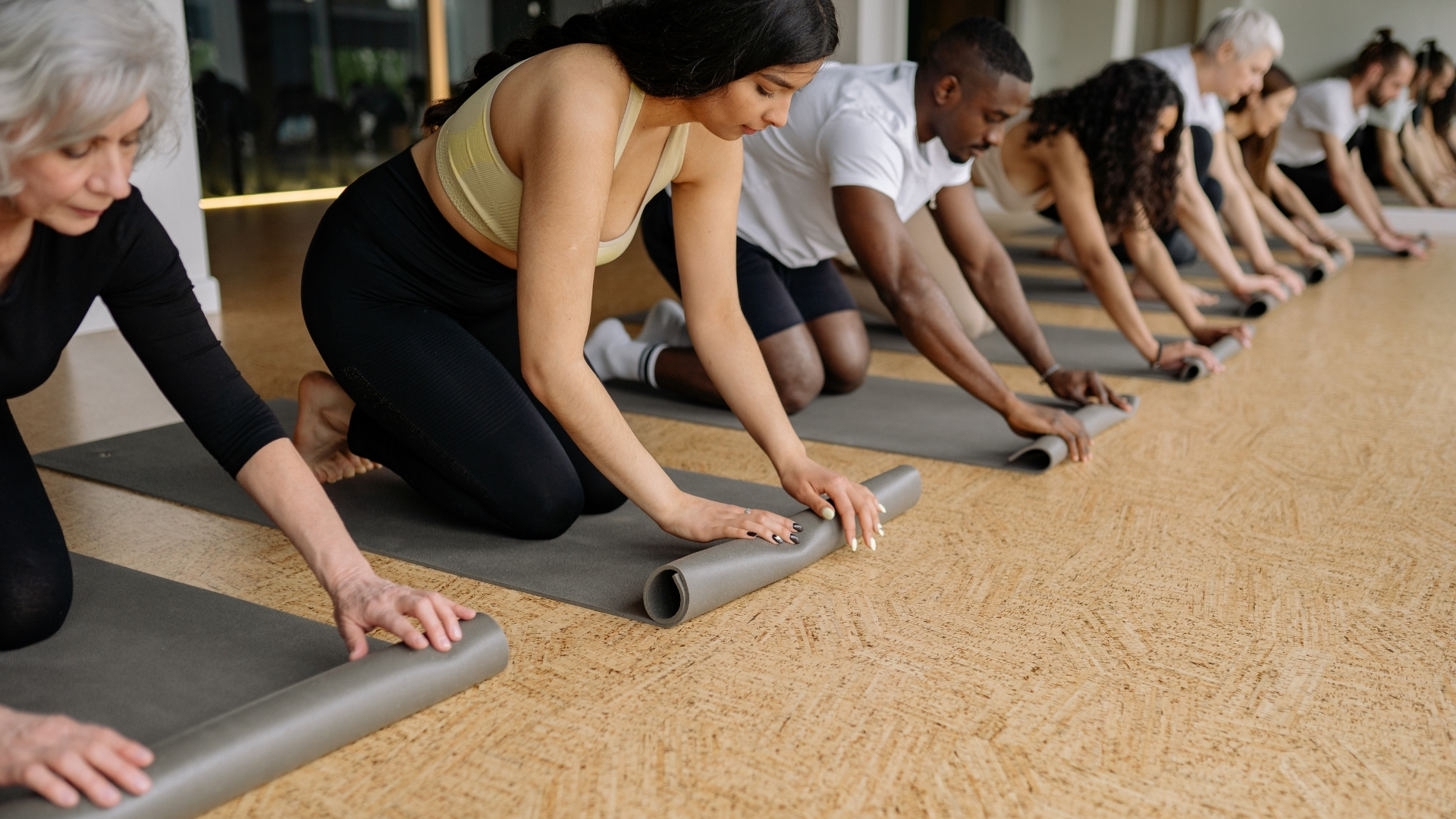
You are worried your clients are bored. That is why you keep changing every session, rotating new exercises, and refreshing routines that were working just fine. You tell yourself you are keeping things fresh. You tell yourself variety is the point. Here is the secret...
When the gyms closed in March 2020, most instructors hit pause. Dr. Karen Fiorillo went live on Facebook every night and built something called Corona Aerobics — free for anyone who showed up, drawing 600 to 800 viewers a night at its peak.
Karen is a STEM teacher, personal trainer, barre instructor, published author, and doctoral researcher — and she’s been coaching through some version of adversity for most of her career. In a recent conversation with AAAI, she shared insights that go well beyond technique. Here are three that stood out.
Your Niche Isn’t a Limitation
Karen works primarily with premenopausal, menopausal, postmenopausal, and postpartum women. She didn’t manufacture that niche. She lived it. Her own history with an eating disorder, overexercising, and the recovery that followed shaped who she is most equipped to serve.
“I’ve been through it, so I can relate to all of the things they’re going through. That’s been my advantage.”
She’s clear about what she’s not, too. She doesn’t try to be the trainer for someone building maximum muscle. “I’m probably not your person,” she says without hesitation. That kind of clarity is what builds trust — and keeps clients coming back.
For coaches who feel pressure to know everything and serve everyone: Karen’s advice is simple. Work with a wide range of clients for six months, pay attention to who you’re most effective with, and then become the authority in that space. Your lived experience is a professional asset.
The Experience Before Class Matters
Karen arrives 15 to 30 minutes before every class. She sets up the mats. She puts the weights out for each participant. She has the music already running when people walk in.
That might sound like a small detail. It isn’t. One of her participants walked in, saw that every spot had weights pre-set, and was visibly stunned. “The look of shock was unbelievable,” Karen recalled. “If you set that tone from the beginning, they won’t feel uncomfortable.”
She also makes a point of asking — every single class, even with the same regulars — whether anyone is new to this format or new to the gym entirely. Because if something makes sense to everyone except one person, that’s not a welcoming environment. And retention starts with how people feel, not just how hard they work.
The coaches who think about the full client experience — before, during, and after class — are the ones whose participants follow them from gym to gym when circumstances change.
You Are in Sales
Karen teaches entrepreneurship to middle schoolers and runs her own wellness business on the side. She also works the gym floor at Crunch, approaching members whose form is off and offering to help. She doesn’t see that as selling. She sees it as doing her job.
“We have to tell people what’s good for them. We are all kind of an entrepreneur even though we’re not classified as such.”
Her advice for coaches who are uncomfortable with the sales side of the industry: be authentic, give value, and don’t try to be who you aren’t. She also shared a stat worth holding onto — it takes 7 to 12 contacts before someone says yes. Persistence, delivered with honesty and care, is a professional skill.
The coaches who build strong, loyal client bases aren’t the ones with the loudest marketing. They’re the ones who show up consistently, educate their clients, and make people feel like coming back is worth it.
Karen’s career didn’t follow a straight line. She lost three gym homes to closures in three years, rebuilt her client base each time, and never stopped showing up early with the mats already laid out. That’s not luck. That’s the kind of professional identity that gets built one class at a time.
The fundamentals she lives by — know your niche, own the experience, show up as both a coach and an educator — are the same ones that make a fitness career last. Want to hear Karen’s full story — including how she built Corona Aerobics, navigated three gym closures, and thinks about coaching through adversity? Watch the full interview here.
Every instructor has a different path into the fitness industry. Some start by earning certifications before ever stepping into the studio. Others discover their passion after years in another career. For Felix Ojeda, founder of Palango Fitness, it started with...
If you love movement, music, and motivating others, group fitness is the perfect path to channel your passion. But enthusiasm alone isn’t enough to lead safe, effective, and unforgettable classes. That’s where a Group Fitness Instructor Certification comes in—and here...
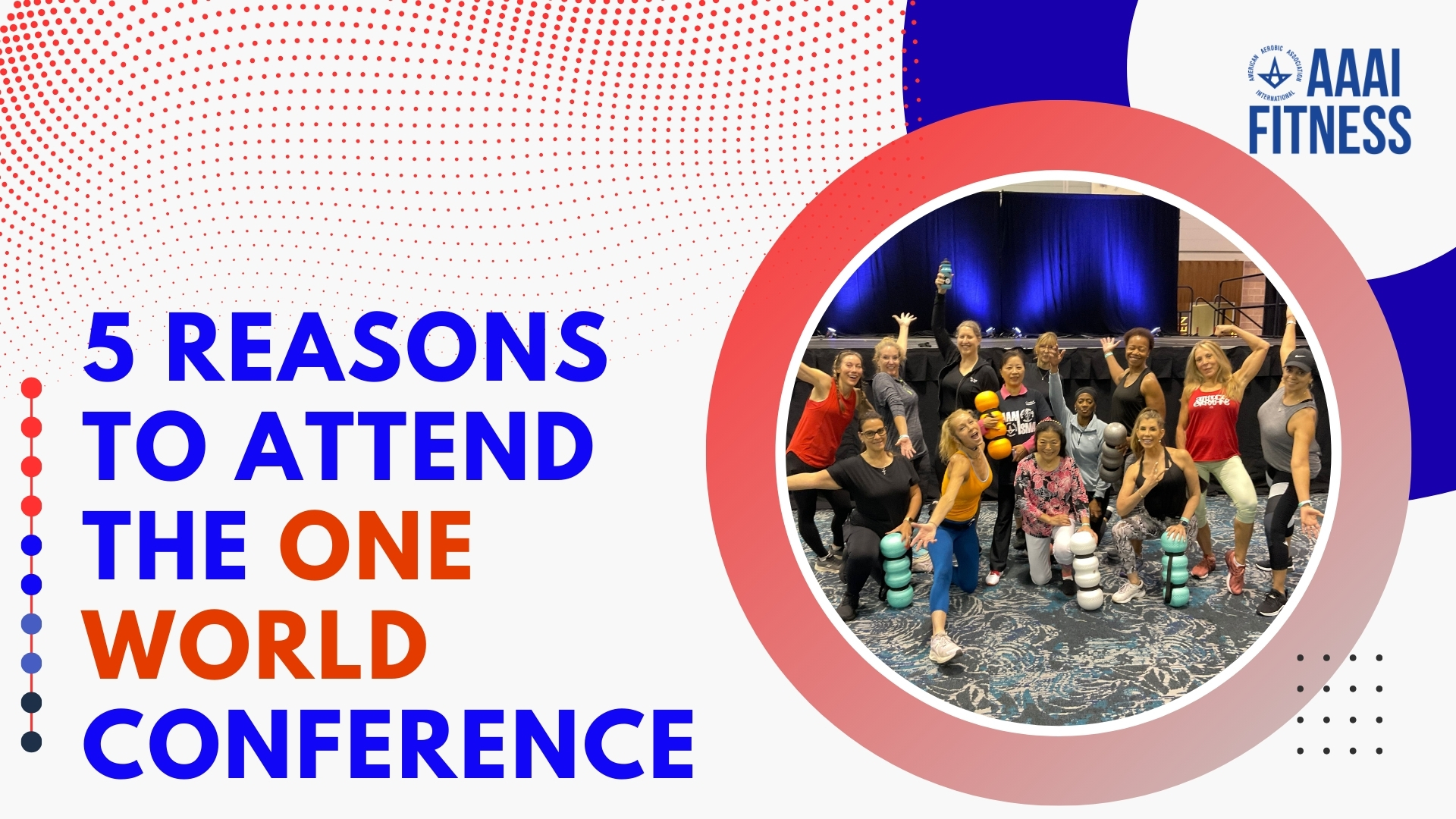
You are worried your clients are bored. That is why you keep changing every session, rotating new exercises, and refreshing routines that were working just fine. You tell yourself you are keeping things fresh. You tell yourself variety is the point. Here is the secret...
If you have ever noticed clients leaving your high-intensity classes exhausted but not stronger, you are not alone. This pattern is showing up across group fitness, and it is rarely the result of lack of effort. More often, programming fails for predictable, human reasons. Energy fluctuates. Stress accumulates. Recovery is neglected. What once felt motivating can quickly become overwhelming.
The problem is not intensity. The problem is design.
Group fitness isn’t just about keeping the heart rate high. It’s about designing classes that build strength, control, and resilience—for the body and the nervous system. Instructors who embrace this approach create sessions that are engaging, sustainable, and results-driven.
The strategies below reflect how professional instructors can structure group fitness classes that deliver impact without burnout.
1. Combine High-Intensity With Mindful Movement
Many instructors default to nonstop energy. But members are increasingly blending HIIT with Pilates, yoga, and recovery-focused exercises.
Integrating mindful movement into high-intensity sessions improves core strength and alignment, supports mobility and flexibility, and reduces nervous system stress. Classes that combine challenge with restoration give clients results they can feel and sustain, while also reducing the risk of injury and dropout.
2. Prioritize Nervous System Balance
Energy is not unlimited. Pushing clients at peak intensity every session can lead to burnout. Professional instructors recognize the importance of nervous system recovery.
Techniques include:
Breathwork cues between sets or rounds
Short mobility breaks to reset posture and alignment
Low-intensity “reset” blocks in the middle or end of class
By programming with the nervous system in mind, instructors maintain engagement and improve performance, even on lower-energy days.
3. Structure Classes With Intentional Sequencing
Strength, control, and recovery aren’t separate—they are interdependent. Strategic sequencing ensures clients get the benefits of each.
Consider starting your classes with activation and mobility before progressing into strength or HIIT segments. Finally, focus on ending with restorative or stability-focused work
Thoughtful sequencing transforms classes from chaotic to cohesive, making movement feel manageable, effective, and rewarding.
4. Normalize Variability in Energy and Performance
Consistency doesn’t require maximum effort every session. When instructors insist on nonstop intensity, members disengage during low-energy days.
Professional programming accounts for variability. High-intensity sessions should still challenge strength, posture and alignment, just as lower-intensity classes do.
This approach removes guilt, preserves momentum, and reinforces the principle that staying connected matters more than intensity alone.
5. Build Classes That Adapt to Real Life
Life interruptions are inevitable. Members may arrive tired, stressed, or distracted. Rigid programming fails; flexible programming thrives.
Adaptable classes:
Include built-in recovery blocks
Offer alternative movements for different energy levels
Encourage clients to focus on effort and engagement, not perfection
Flexibility in class design allows instructors to deliver results in real-world conditions, keeping members motivated and retained.
Why This Approach Matters
These strategies prioritize sustainability over short-term intensity. They reduce cognitive load, protect energy, and make clients feel capable rather than overwhelmed.
Instructors who blend strength, control, and recovery are not just teaching exercises—they are building trust, consistency, and long-term adherence. Classes become more than workouts; they become experiences that support clients’ lives.
Expanding your skills with AAAI Fitness certifications and workshops in yoga, Pilates, and stress relief. These courses equip instructors to lead in this new era. These programs provide the knowledge and tools to design balanced, high-impact classes that meet members’ evolving needs, protect the body, and foster engagement.
The future of group fitness rewards instructors who program with intention, balance, and adaptability. Those who embrace this shift will keep clients coming back, improve outcomes, and thrive in a competitive industry.
Every instructor has a different path into the fitness industry. Some start by earning certifications before ever stepping into the studio. Others discover their passion after years in another career. For Felix Ojeda, founder of Palango Fitness, it started with...
If you love movement, music, and motivating others, group fitness is the perfect path to channel your passion. But enthusiasm alone isn’t enough to lead safe, effective, and unforgettable classes. That’s where a Group Fitness Instructor Certification comes in—and here...
You are worried your clients are bored. That is why you keep changing every session, rotating new exercises, and refreshing routines that were working just fine. You tell yourself you are keeping things fresh. You tell yourself variety is the point. Here is the secret...
Whether you’re just starting out in the fitness industry, a seasoned professional, or part of the larger fitness community, One World Conference offers something for everyone. Here are the top five reasons you should be planning your trip to Atlantic City for June 5-7.
1. For the New Fit Pro: Jumpstart Your Career
If you’re new to the industry, One World is a game-changer. You can get certified and gain hands-on experience with top instructors. Choose the Personal Trainer Certification with Todd Bezilla on Friday, or the Group Fitness Instructor Certification with Joanne Smith-Tavener on Sunday. These sessions provide practical tools, knowledge, and credentials that help you build confidence and credibility as a trainer. There’s no better way to learn, grow, and start your career on the right foot.
2. For the Veteran Trainer: Stay Ahead of the Curve
Even experienced professionals need to stay fresh. One World offers cutting-edge education and innovative strategies to keep your programming, client engagement, and coaching skills sharp. Dive into advanced sessions, masterclasses, and workshops that challenge your thinking and inspire creativity, so you can continue delivering results for your clients while staying inspired yourself.
3. Meet the Vendors & Sponsors
One World is the fitness industry hub, where attendees can connect directly with sponsors, vendors, and industry leaders. Discover new products, explore services, and build relationships with the people who are shaping the future of fitness. Whether you’re looking for tools to enhance your business or new ideas to bring to your clients, these connections provide real-world value and inspiration.
4. The Best Presenters in the Industry
One World Conference brings together the best of the best in the fitness industry. Attendees get to experience sessions led by top instructors and innovators, from energizing main stage classes to specialized masterclasses. Seeing these experts in action provides practical insights, inspiration, and techniques you can take straight back to your clients and programs.
5. For the Community: Celebrate Fitness Together
One World Conference isn’t just about education—it’s about connection. Join like-minded professionals, students, and enthusiasts in celebrating a shared passion for fitness, wellness, and innovation. Whether it’s networking, attending dynamic sessions, or simply feeling the energy in the room, this conference is a place to belong, learn, and be inspired alongside others who love what you do.
No matter who you are in the fitness world, the One World Conference in Atlantic City has something to elevate your skills, network, and passion. Don’t miss the chance to grow, connect, and be part of the industry’s premier gathering.
🎟️ Register today and secure your spot for an unforgettable experience!
Every instructor has a different path into the fitness industry. Some start by earning certifications before ever stepping into the studio. Others discover their passion after years in another career. For Felix Ojeda, founder of Palango Fitness, it started with...
If you love movement, music, and motivating others, group fitness is the perfect path to channel your passion. But enthusiasm alone isn’t enough to lead safe, effective, and unforgettable classes. That’s where a Group Fitness Instructor Certification comes in—and here...

You are worried your clients are bored. That is why you keep changing every session, rotating new exercises, and refreshing routines that were working just fine. You tell yourself you are keeping things fresh. You tell yourself variety is the point. Here is the secret...
In the fitness industry, great workouts matter. But the trainers who truly build careers are the ones who build relationships.
In a recent interview with Chavez Green, we talked with a seasoned fitness professional about what actually keeps clients coming back year after year. His insights reveal that successful trainers aren’t just program designers. They are listeners, professionals, and problem solvers who know how to create trust.
Here are three powerful takeaways from the conversation that every trainer can use immediately.
1. Start With the Client’s “Why”
Too many trainers jump straight into programming without fully understanding the person standing in front of them.
Strong relationships start with curiosity.
“Getting to know your client… getting to know who they are and why they’re there, because they’re coming to you for some type of solution.”
That means asking thoughtful questions during the initial assessment and continuing those conversations over time. Clients change. Their goals evolve. Life happens.
Your role is to stay connected to their motivations so you can guide them through those shifts.
He also emphasizes the importance of documenting what you learn:
“If you can’t measure it, you can’t manage it… it’s important to have those measurables and always go back to their why.”
Great coaches don’t rely on memory alone. They track progress, record feedback, and revisit the reasons a client started in the first place.
2. Coaching Requires Consent, Communication, and Professionalism
Correcting form is one of the most common challenges new trainers face. But the solution isn’t just better technical knowledge.
It’s communication.
Before stepping in to assist or adjust a client, he recommends asking permission and demonstrating the movement first.
“You always ask for some type of consent first… ‘Hey, I’m going to step in here. Are you okay with that?’”
This approach does three things:
Builds trust
Respects personal boundaries
Reinforces your professionalism
Even though the environment may feel casual, trainers still operate in a professional setting.
“Never forget the level of professionalism that you’re there to have with them… it is still a place of work.”
Clients want expertise, but they also want to feel safe, respected, and supported.
3. Customer Service Is the Real Secret to Success
Technical skills may open the door, but customer experience is what keeps it open.
According to the interview, the most successful trainers treat personal training like the service industry that it is.
“The first thing is the customer service aspect. We’re in a service industry.”
That includes everything from organization to communication and preparation.
Showing up on time, having equipment ready, and planning sessions in advance sends a powerful message to clients.
“I already had the bench set up, I had the resistance bands out already… I was already prepared so we could flow right into the workout.”
When clients see that level of preparation, they know you value their time and their goals.
And when communication is clear, trust grows even stronger.
“Every client should feel special… make their experience unique.”
Because at the end of the day, clients aren’t just buying workouts.
They’re choosing you.
Want More Insights From the Interview?
These three lessons are just a snapshot of the full conversation.
🎥 Watch the complete interview to hear more practical insights on coaching, client motivation, and building a successful career in fitness.
Every instructor has a different path into the fitness industry. Some start by earning certifications before ever stepping into the studio. Others discover their passion after years in another career. For Felix Ojeda, founder of Palango Fitness, it started with...
If you love movement, music, and motivating others, group fitness is the perfect path to channel your passion. But enthusiasm alone isn’t enough to lead safe, effective, and unforgettable classes. That’s where a Group Fitness Instructor Certification comes in—and here...
You are worried your clients are bored. That is why you keep changing every session, rotating new exercises, and refreshing routines that were working just fine. You tell yourself you are keeping things fresh. You tell yourself variety is the point. Here is the secret...