
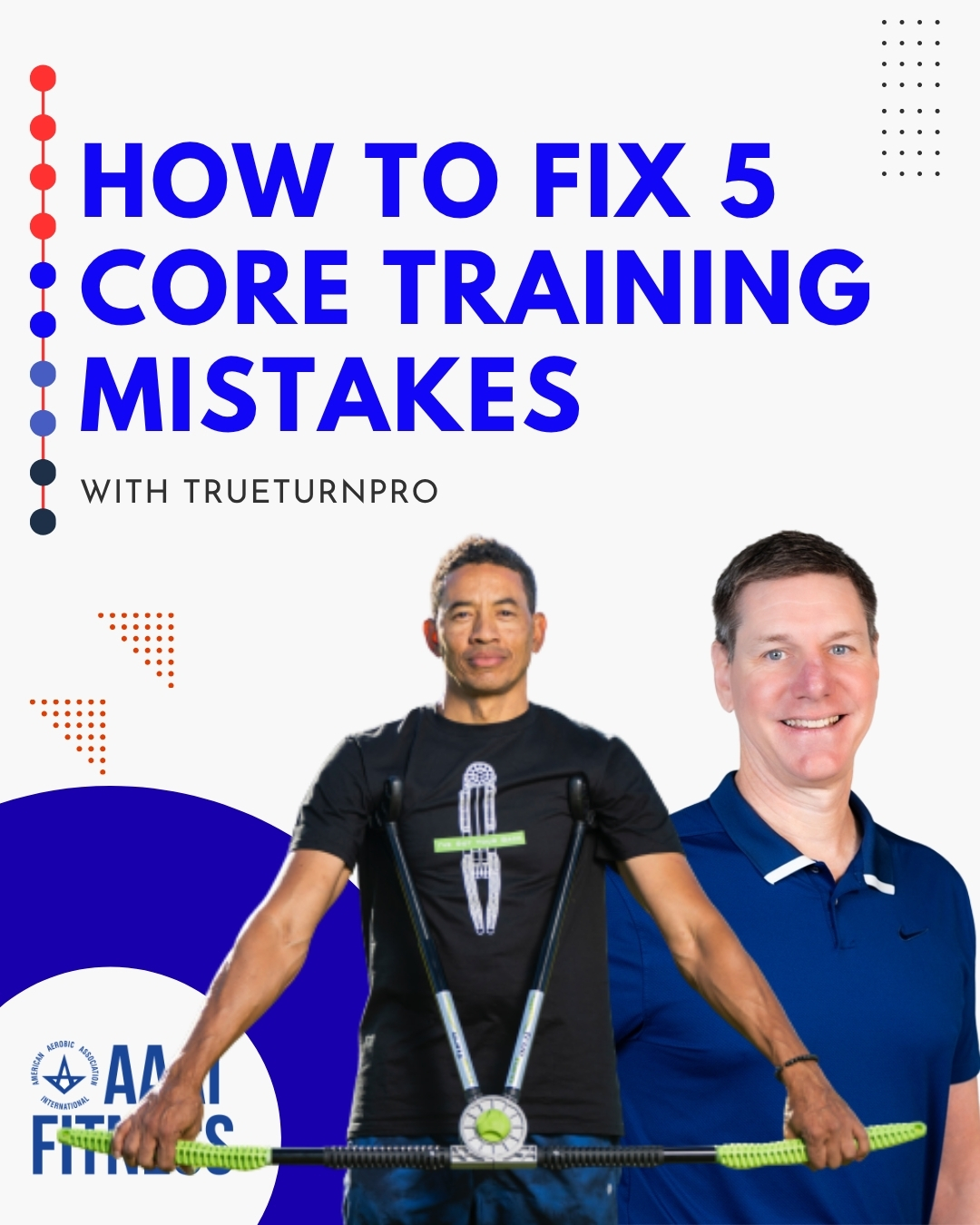
Rotation is one of the most fundamental movements in the human body — and one of the most misunderstood in the fitness industry. We sat down with Carl Horne, former NBA strength and conditioning coach and founder of TrueTurnPro, and John Preston, MS, CSCS, Director of Education at TrueTurnPro, to talk about what trainers are getting wrong, what they should be focusing on, and why rotation is the missing piece in most training programs. Here are five takeaways every fit pro needs to hear.
1. Your Clients Are Rotating Every Day — Just Not the Right Way
Most people think of rotation as an exercise. Carl and John want you to think of it as a survival skill.
“You can’t brush your teeth, walk your dog, drive your car, go to the grocery store without rotation. You rotate whatever step you take.” — Carl Horne
The problem? The body cheats. Arms compensate for the spine constantly — and over time, that compensation leads to immobility, dysfunction, and pain. As Carl puts it, it’s a slow ticking bomb that most trainers aren’t addressing specifically enough. If you’re not intentionally training thoracic rotation with your clients, their mobility is quietly declining no matter how much they work out.
2. The Core Is Not Just Your Abs — And Crunches Are Not a Core Exercise
This one might sting a little, but it needs to be said.
“If you were to ask any trainer to list three exercises for core training, crunches is probably going to be on most people’s list. It’s an abdominal exercise, not a core exercise.” — John Preston
John and Carl stress that the industry needs to universally redefine what the core actually is. True core function involves the muscles that move and stabilize the spine — from the shoulders to the hips. Training the abdominals in isolation does not address the thoracic spine, rotational stability, or ground force reaction. If your clients are doing crunches and calling it core work, it’s time to have a conversation.
3. Most Rotational Exercises Aren’t Actually Targeting Rotation
Here’s where things get really interesting — and a little humbling.
“The fitness industry doesn’t know how to appropriately train people in the transverse plane. Instead of teaching them how to, they have tried and they’re not wrong to try. They’re attempting to do the right thing.” — John Preston
Medicine ball wall slams, dumbbell twists, squat-and-rotate combos — these exercises look like rotation, but gravity is pulling straight down, not opposing the transverse plane. That means the resistance isn’t actually challenging the muscles you’re trying to train. John and Carl aren’t throwing shade at trainers for trying — but they are asking everyone to think more critically about where the force is actually being applied.
4. Don’t Lay Fitness on Top of Dysfunction
This is one of the most powerful coaching philosophies in the interview — and it applies to every trainer, at every level.
“The goal for me has always been, don’t lay fitness on top of dysfunction. If somebody’s presenting with low back pain, we’re not trying to figure out how to increase their bench press or their squat or their deadlift. You don’t focus on the fitness until you restore the function first.” — John Preston
Before you load a client, assess them. If something is off — tight hips, weak lower abdominals, limited thoracic mobility — address it. Carl adds that nine out of ten people he examines have hip dysfunction, particularly in the psoas, that is directly contributing to low back pain. Restoration first. Fitness second.
5. The Best Trainers Personalize — Every Single Time
When asked what separates a good personal trainer from a great one, the answer was simple and direct.
“Be mindful of the person in front of you and make sure you personalize the workout to their unique needs. The good trainer knows proper technique from improper technique. The great trainer connects with what’s appropriate.” — Carl Horne
Whether you’re working with a professional athlete or someone who can barely step down one stair, the principle is the same: meet your client where they are, assess their limitations, and design accordingly. That’s not just good coaching — that’s what builds loyalty, results, and referrals.
Want to Go Deeper?
These five tips are just the beginning. Carl and John covered thoracic spine anatomy, kinetic chain mechanics, group fitness applications, and much more in our full interview.
🎥 Watch the full interview below.
And if you’re ready to experience TrueTurnPro for yourself — not just read about it — Carl and John will both be at the AAAI Fitness One World Conference in Atlantic City, June 5–7, 2026.
They’ll be teaching hands-on workshops where you’ll feel the difference in your own hands. As John says, you can’t get that online.
🎟️ Register now at AAAIFitness.com and secure your spot before it’s gone.
📅 June 5–7, 2026 | Atlantic City Convention Center, NJ
Let's Go

What Great Coaches Understand About Behavior Change
Personal training is about movement, but great coaching is about people. Clients rarely walk through the gym doors with a goal that is only about exercise. They may say they want to lose weight, build muscle, get stronger, or improve their fitness, but underneath that...

How to Ask for a Raise as a Group Fitness Instructor
You enjoy teaching group ex classes. You are reliable, show up on time, and members show up for your classes each week. And, you’ve gone the extra mile, taking on extra responsibilities and filling in for other instructors when they are sick or go on vacation. There...
5 Ways to Bust Out of a Coaching Rut
Even the most experienced fitness professionals can get stuck in a rut. You know the feeling. You walk into class, teach the same format, use the same cues, reach for the same exercises, and suddenly realize you could probably teach the entire session on autopilot....