21 Gym Etiquette Rules for Personal Trainers and Group Fitness Instructors
1. Arrive Early and Prepare Your Space
A trainer should arrive before the client, not with them and definitely not after them. That time is there to check equipment, scan the floor, adjust the workout if needed, and be fully ready when the client walks in.
If your client arrives and you are still looking for a bench, the session has already started badly.
Professional Standard
- Arrive 10 to 15 minutes early.
- Check equipment.
- Prepare your space.
- Adapt the session to what is actually available.
What to Avoid
- Do not save multiple stations with towels or equipment.
- Do not ask members to give up equipment for your client.
- Your program should adapt to the gym floor, not the other way around.
2. Re-Rack Weights and Clean Up Completely
After the session ends, there should not be a loaded barbell, dumbbells on the floor, bands hanging around, or a sweaty mat left behind.
As a trainer, your cleanup standard should be higher than the average member’s.
Professional Standard
- Build cleanup time into every session.
- Re-rack weights properly.
- Wipe down used surfaces.
- Return equipment where it belongs.
What to Avoid
- Do not leave a mess because you are rushing to your next appointment.
- Cleanup is part of the session.
3. Manage Gym Floor Space Fairly
A shared gym floor is not your private training studio. Problems start when trainers spread out too far, set up giant circuits, or act like other members are in the way.
Professional Standard
- Keep your setup tight and efficient.
- During busy hours, use only the space you need.
- Be ready to adjust when necessary.
What to Avoid
- Do not run complicated circuits during peak times.
- Do not tell clients to guard equipment while you move elsewhere.
- Do not make members feel like they are interrupting your session.
4. Control Your Noise Level
Your voice carries in a gym. Coaching requires instruction and encouragement, but there is a difference between effective communication and turning your session into a performance.
Professional Standard
- Coach at a normal conversational volume.
- Stay close enough to your client that you do not need to shout.
What to Avoid
- Do not count reps loudly across the room.
- Do not shout routine encouragement just to sound energetic.
- Do not use a performance voice to impress the room.
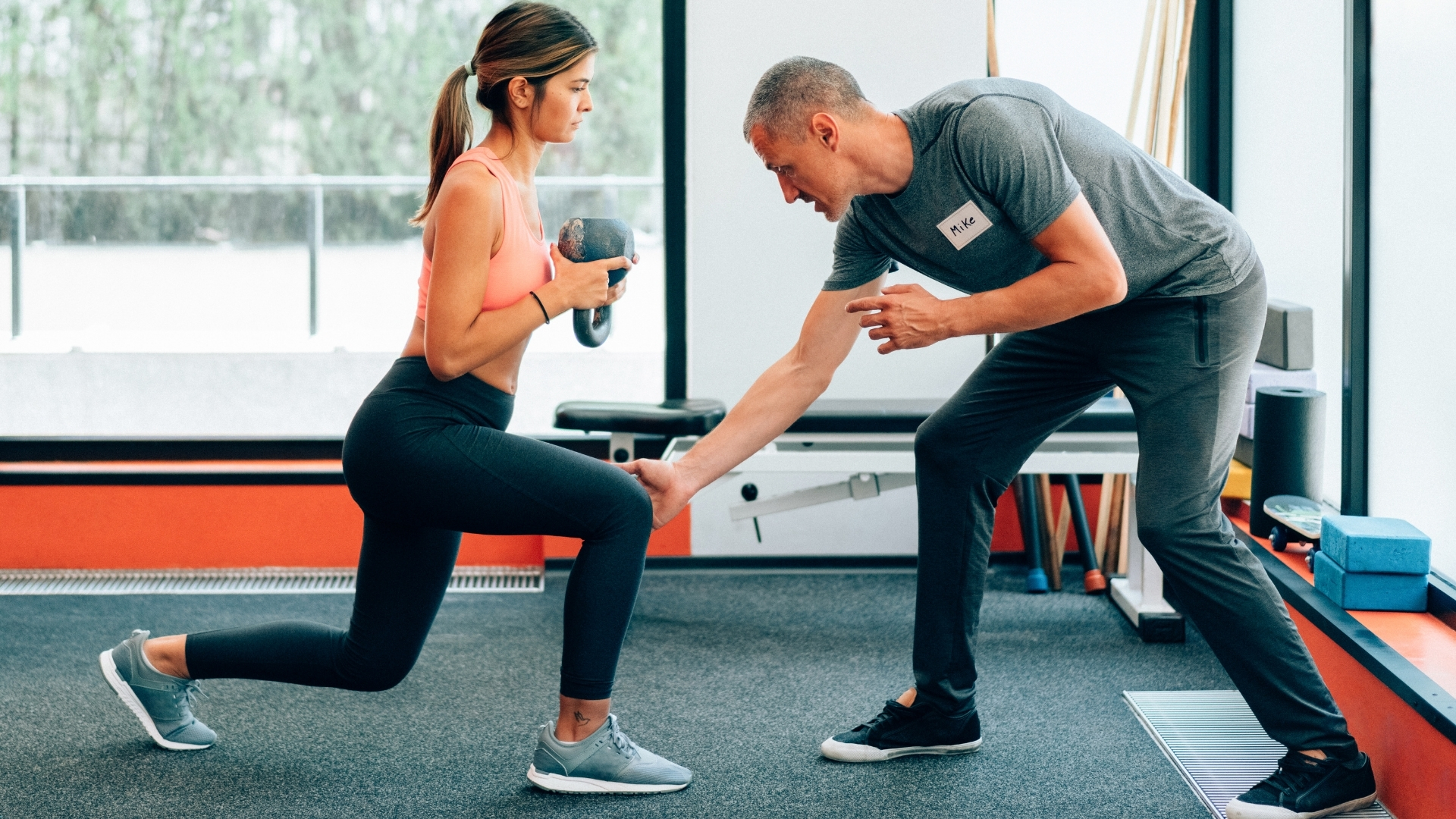
5. Correct Client Form Professionally
If a client needs technical correction, do it in a way that protects their dignity and keeps their confidence intact.
Professional Standard
- Step closer.
- Speak calmly.
- Use one clear cue at a time.
- Make corrections privately whenever possible.
What to Avoid
- Do not shout corrections from across the room.
- Do not repeat the same cue over and over if it is not working.
- Find a better cue.
6. Stay Focused on Your Client
During a paid session, your attention belongs to the client.
Professional Standard
- Acknowledge others briefly if needed.
- Return your focus to the client immediately.
What to Avoid
- Do not chat with staff, members, or other trainers while the client waits.
- Do not leave a client alone during a session to socialize.
7. Limit Phone Use During Sessions
Phones are useful for timers, notes, and tracking workouts. Clients can tell the difference between professional use and distraction.
Professional Standard
- Use your phone only when it directly supports the training session.
What to Avoid
- Do not text.
- Do not scroll social media.
- Do not check notifications during coaching.
- Do not take personal calls unless it is an emergency.
- Do not film clients without prior consent.
8. Use Facility Areas Appropriately
Just because an area is open does not mean it is the right place to run a long training session.
Professional Standard
- Use each area as intended.
- Follow gym policies.
- Choose setups that create minimal disruption.
What to Avoid
- Do not occupy high-demand areas for an entire session during busy hours.
- Do not coach in hallways, entrances, or spaces that create safety concerns.
9. Maintain Professional Hygiene and Appearance
Personal training is close-contact work. Hygiene and appearance matter.
Professional Standard
- Wear clean, professional attire.
- Use deodorant.
- Stay groomed.
- Freshen up between sessions when needed.
What to Avoid
- Do not wear strong cologne or perfume.
- Do not re-wear unwashed training clothes.
- Do not ignore how your presentation affects the client experience.
10. Never Solicit Clients on the Gym Floor
Seeing a potential client does not give you permission to interrupt their workout.
Professional Standard
- Build your business through quality coaching, referrals, and proper consultation channels.
What to Avoid
- Do not approach another trainer’s client.
- Do not disguise sales tactics as helpful advice.
- Do not undermine coworkers.
11. Maintain Professional Boundaries
Training relationships can become personal quickly. Boundaries must remain clear.
Professional Standard
- Be warm, respectful, and consistent.
- Keep sessions focused on client goals and well-being.
What to Avoid
- Do not allow sessions to become unpaid therapy.
- Do not overshare your personal life.
- Do not create favorites.
- Do not date current clients.
12. Stay Within Your Scope of Practice
Clients may ask questions that fall outside your qualifications.
Professional Standard
- Refer out when necessary.
- Stay within your expertise.
- Adjust training conservatively.
What to Avoid
- Do not diagnose injuries.
- Do not interpret medical scans or lab results.
- Do not provide individualized nutrition advice unless legally qualified.
13. Do Not Give Unsolicited Advice
Poor technique does not automatically make it your responsibility to intervene.
Professional Standard
- Step in only when there is an immediate safety concern.
What to Avoid
- Do not use advice as a sales strategy.
- Do not hand out business cards after giving unrequested coaching.
14. Respect Other Trainers
Not every trainer coaches the same way you do.
Professional Standard
- Share space fairly.
- Handle disagreements professionally.
- Treat coworkers with respect.
What to Avoid
- Do not badmouth another trainer or member.
- Do not create territorial conflicts over equipment.
15. Be Punctual
Running late sends the message that your time matters more than the client’s.
Professional Standard
- Start on time.
- End on time.
- Leave transition time between appointments.
What to Avoid
- Do not start late without acknowledging it.
- Do not regularly run over sessions.
- Do not overschedule your day.
16. Handle Emotional Moments Professionally
Clients sometimes become discouraged, emotional, or overwhelmed.
Professional Standard
- Lower your voice.
- Acknowledge their feelings.
- Adjust the session appropriately.
- Move to a quieter area if needed.
What to Avoid
- Do not ignore obvious distress.
- Do not force the workout forward.
- Do not become the client’s therapist.
17. Prepare Before Group Fitness Class
If participants arrive while you are still setting up, you are already behind.
Professional Standard
- Arrive 15 to 20 minutes early.
- Set up equipment.
- Test music and technology.
- Greet participants.
What to Avoid
- Do not prepare the room while members are arriving.
- Do not ignore newcomers because you are still organizing.
18. Coach All Fitness Levels
A class often includes both beginners and experienced participants.
Professional Standard
- Build modifications and progressions into every workout.
- Present all options as equally valid.
What to Avoid
- Do not single out participants for modifications.
- Do not design classes for only one fitness level.
19. Stay Engaged After Class
The class experience does not end when the final song stops.
Professional Standard
- Stay available for a few minutes after class.
- Answer questions.
- Help reset the room.
What to Avoid
- Do not leave immediately after class.
- Do not leave cleanup to participants.
- Do not block room turnover with long conversations.
20. Represent the Profession at All Times
Even when you are off the clock, people still recognize you as a fitness professional.
Professional Standard
- Demonstrate courtesy and professionalism at all times.
- Be consistent in how you conduct yourself.
What to Avoid
- Do not complain about clients, staff, or management where members can hear.
- Do not act differently when you think nobody is watching.
21. Respect Privacy When Filming
Content creation is common in fitness, but privacy should always come first.
Professional Standard
- Follow facility policies.
- Obtain clear consent before filming clients.
- Be mindful of who appears in the background.
- Choose filming locations and times that respect others.
What to Avoid
- Do not film people without their knowledge or consent.
- Do not block equipment, walkways, or shared spaces with cameras.
- Do not assume filming is allowed everywhere.
- Do not film in locker rooms, changing rooms, showers, or restrooms.
Final Thoughts
For personal trainers and group fitness instructors, gym etiquette is not optional.
People notice the small things. They notice whether you clean up after sessions, respect shared equipment, stay focused on clients, and act professionally under pressure. Over time, those everyday habits shape your reputation far more than most trainers realize.
Professionalism is built in the moments between the workouts.
Ready to take the next step in your career? AAAI Fitness certifications help personal trainers and group fitness instructors build practical knowledge, professional credibility, and real-world coaching skills.