
A mock personal training interview is where many qualified trainers lose job opportunities, not because they lack knowledge, but because they misunderstand what gyms are evaluating.
Most candidates believe they need to impress the hiring manager with intensity, creativity, or advanced exercises. This pressure hits shy personal trainers especially hard, even though being introverted is not a disadvantage in one-on-one coaching.
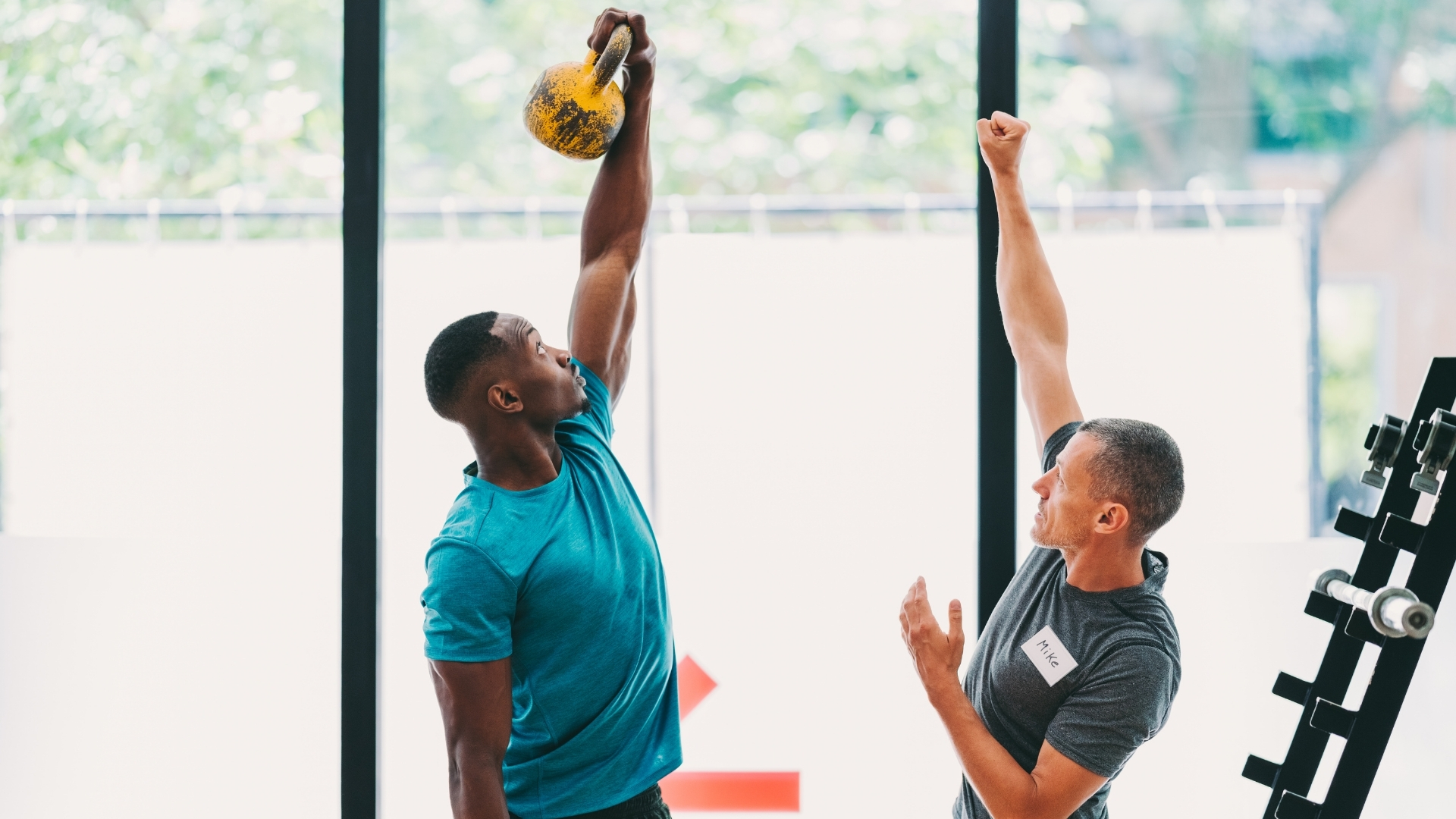
This article explains what a mock personal training interview really is, how gyms score candidates, what mistakes lead to rejection, and how to approach a mock client session calmly, professionally, and strategically.
Mock Personal Training Interview Explained
A mock personal training interview is a simulated training session that gyms use to evaluate a potential new trainer’s ability to coach safely, communicate clearly, and exercise sound judgment. It is usually reserved for those who have already passed the initial sit-down job interview.
A manager or staff member plays the role of a mock client while observing how the fitness instructor structures a session, selects exercises, and responds in real time. Intensity and creativity are not the primary focus.
What Is a Mock Personal Training Interview?
A mock personal training interview is a hands-on hiring assessment commonly used by commercial gyms, private studios, and training facilities.
It may also be called:
- a mock client session
- a mock training session
- a practical interview
- a practical exam
During this meeting, you are asked to coach a short session while being observed. The purpose is not to test your physical fitness or creativity. It is to determine whether you can safely and professionally work with real clients on the gym floor.
Often, the “client” will be a member of the gym staff, maybe another personal trainer, or one of the salespeople. In a large, chain gym, you would likely be evaluated by either the manager or the fitness/ wellness director. If you are applying to a smaller private facility, the owner may be observing you.
Why Gyms Use Mock Personal Training Interviews
Gyms use mock interviews to reduce risk.
A résumé, fitness certification, or recommendation is great, but it does not demonstrate how a trainer:
- communicates with a client
- handles uncertainty
- prioritizes safety
- respects personal boundaries
That’s what a mock personal training interview can highlight.
During this time, the hiring manager is asking one core question:
Can we trust this person with paying clients?
How Mock Personal Training Interviews Are Scored
Safety (Non-Negotiable. Very Important!)
- Appropriate exercise selection
- Conservative progressions
- Immediate response to pain or discomfort
One safety concern can override everything else you do right
Communication
- Clear instructions to the client
- Simple, effective cues
- Ability to listen to clients’ concerns and questions
Judgment
- Logical flow of the session
- Exercise choices that match the client’s abilities/health issues (if any)
- Willingness to adjust the program on the fly
Professionalism
- Calm demeanor
- Dresses appropriately
- Respectful language
- Appropriate boundaries (ask permission before touching/cueing)
Coachability
- Openness to feedback
- Ability to adapt to change (the machine you want is used by someone else)
- No defensiveness when offered constructive feedback
Your athleticism, workout intensity, and program creativity are rarely scored.
What Trainers Think vs. What Gyms Actually Evaluate
| Trainers Think | Gyms Actually Evaluate |
| Workout intensity | Client safety |
| Advanced exercises | Sound judgment |
| Creativity | Clear communication |
| Personal fitness level | Coaching ability |
| Performance | Professionalism |
This disconnect is why so many candidates struggle.
What the Gym Hiring Manager Is Evaluating (And What They Are Not)
What they ARE evaluating
- Exercise safety
- Coaching clarity
- Session structure
- Client awareness
- Decision-making
What they are NOT evaluating
- How hard the client works (the number of sets is often not relevant)
- How many exercises are programmed into the mock training session
- Your physique
- How impressive the session looks
Trying to score points in the wrong category costs people jobs.
The Mock Client Scenario Explained
Mock client descriptions are often intentionally vague.
You may be told:
- “This client wants to lose weight”
- “They’re new to exercise”
- “They sit most of the day”
This ambiguity tests whether you:
- ask clarifying questions
- avoid assumptions
- default to safe, general programming
Assuming injuries, fitness level, or goals without asking is a common red flag.
Pro Tip: Safety Questions to Ask Before a Mock Personal Training Interview
Before the exercise session begins, ask these two questions
- “Can I assume the person is apparently healthy?”
- “Can I also assume the person has completed all necessary paperwork, including the waiver, health history form, and PAR-Q, before the training session begins?”
Another good question to ask is, “Can I assume the client is already properly warmed up?” Most people will miss asking these critical questions. By asking these questions, you are telling the hiring manager that you are prioritizing safety. You are protecting not only the client but the gym’s brand, too.
The person doing the evaluation will generally reply yes to all of these questions.
How to Structure a Mock Personal Training Interview Session
The mock personal training interview often causes a lot of stress and anxiety among new trainers, but it doesn’t have to. A simple, structured exercise program performs best.
Because most people who hire personal trainers are novices and those who have not worked out in a long time, the simplest and most effective exercise program for the mock training interview is a total-body circuit strength-training program. Here’s an overview:
- Choose 4 to 5 different exercises in advance and have the client perform one set of each.
- Use the RPE scale to gauge how heavy the weight feels for the client. Aim for a rating of 4 to 5 (moderate load)
- Before each exercise, explain the primary muscles used
- Demonstrate the exercise if the client appears not to understand
- Cue the exercise properly, remembering to ask permission if you need to correct their form
Remember, you are not being graded by how difficult or complex the workout is. They really just want to make sure you are safe and see how you interact with members.
Pro tip: Make sure the client performs the exercises in the proper order. For example, don’t have them perform biceps curls immediately before a lat pulldown exercise.
Sample Circuit Strength Training Program for a Mock Personal Training Interview
Perform one set of each exercise
- Chest press machine
- Seated row
- Leg press
- Shoulder press
- Leg curl
Notice how each of these is a compound movement. Consider giving priority to multi-joint, compound exercises in your program. Also, notice that each chosen exercise does not overlap with the next, giving muscle groups time to recover.
Exercises That Work Well in a Mock Personal Training Interview
Safe, familiar movements allow you to demonstrate your coaching skills.
Examples include:
- Body weight squats or sit-to-stands
- Hip hinges
- Push-ups or wall push-ups
- Seated rows using a machine or resistance bands
- Core stability exercises like planks
These minimize risk and highlight communication.
Exercises That Often Backfire During The Mock Personal Trainer Interview
Avoid exercises that increase complexity or injury risk.
Examples:
- Max-effort lifts
- Plyometrics
- Olympic lift variations
These raise questions about judgment, not knowledge.
Common Mistakes That Cost Trainers the Job
These mistakes appear often in failed mock interviews.
- Talking instead of coaching
- Ignoring discomfort
- Rushing the session
- Trying to impress instead of educate
- Failing to explain exercise selection
Calm, controlled coaching consistently outperforms intensity.
What to Say During a Mock Personal Training Interview
You do not need to narrate everything, but selective explanations, where appropriate, help.
Effective phrases include:
- “I’m choosing this exercise because…”
- “Let me know if this causes you discomfort.”
- “Since this is a mock session, I’m keeping this conservative.”
These statements demonstrate awareness and professionalism. Hiring managers are listening for how you communicate and encourage clients, not just what exercises you choose. Clear, supportive language and basic motivating clients go a long way during a mock session.
What to Wear and How to Present Yourself
Appearance and demeanor matter.
- Clean, professional workout attire
- Neutral colors
- Proper footwear
- Good hygiene (avoid cologne/perfume)
- Calm body language
You are being evaluated as a representative of the gym.
How Long Mock Personal Training Interviews Usually Last
Most mock sessions last 10 to 20 minutes.
Short sessions are normal and not a negative signal. Hiring managers often gather enough information quickly. Remember, evaluating your performance is one of the many things they do during their working day.
Differences Between New and Experienced Trainers
New trainers
- Safety and coachability matter most
- Simplicity is expected
Experienced trainers
- Judgment and adaptability are scrutinized
- Overconfidence can hurt
Safety remains the top priority at every level.
How to Recover If You Make a Mistake
If you make a mistake, don’t worry. Stuff happens. Recovery matters too.
Good recovery looks like:
- Acknowledging the issue calmly
- Adjust the exercise accordingly
- Briefly explain the change
- Move forward and continue the workout
Trying to hide mistakes raises concerns.
After the Mock Interview: What Happens Next?
After you complete the mock personal training interview:
- The feedback you get may be immediate or delayed by a few days
- Silence does not always mean you are not hired
- Decisions often involve multiple candidates to see who fits the job best
A brief, professional follow-up email or handwritten note is appropriate a day or two later.
Frequently Asked Questions
Is a mock personal training interview hard?
It can be challenging, mainly because trainers often misunderstand what is being evaluated. Safety and communication matter more than performance.
Can you fail a mock personal training interview?
Yes. Safety concerns, poor communication, or unprofessional behavior can quickly disqualify you from being hired.
Do you need to train the mock client intensely?
No. Intensity is not a scoring factor and often works against candidates.
Should you bring a workout plan?
Usually, no. Hiring managers want to see how you think and adapt in real time.
What if the mock client reports pain?
You should adjust the workout immediately. Ignoring pain is one of the fastest ways to fail.
Final Advice From a Trainer Educator
After decades in fitness education and hiring environments, the pattern is consistent.
The trainers who succeed are not the most impressive.
They are the most reliable, safe, and coachable.
Approach the mock personal training interview as a professional evaluation, not a performance, and your chances of being hired increase dramatically.
Written by Joe Cannon, MS, a fitness educator with over 30 years of experience hiring, training, and mentoring personal trainers in commercial gyms and private facilities.
Want to Learn More?

What a Heart Attack Taught a Fitness Pro
Fitness professionals spend their careers helping other people become stronger, healthier, and more capable. But what happens when the fitness professional suddenly becomes the person who needs to rethink everything they know about health and exercise? For Mike...

How to Create Your Own Fitness Career Path
A career in fitness is about more than teaching classes or designing workout programs. It’s an opportunity to help people improve their health, build confidence, and create lasting lifestyle changes. Whether your interests lie in exercise science, group fitness,...
What Great Coaches Understand About Behavior Change
Personal training is about movement, but great coaching is about people. Clients rarely walk through the gym doors with a goal that is only about exercise. They may say they want to lose weight, build muscle, get stronger, or improve their fitness, but underneath that...