
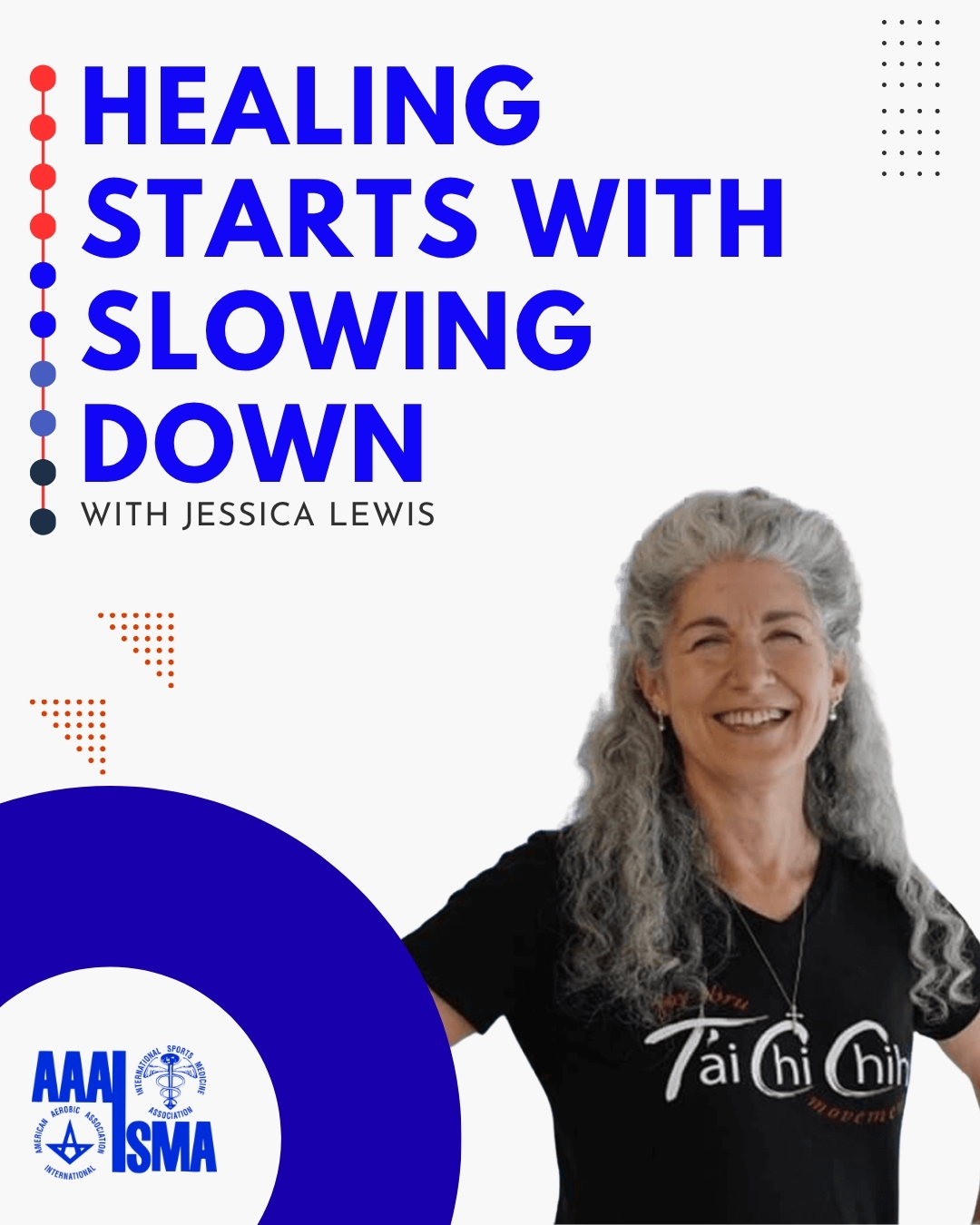
When it comes to helping people improve their physical, emotional, and mental well-being, certified personal trainer and wellness coach Jessica Lewis takes a holistic approach. Through her work with both veterans and civilians, Jessica uses the gentle yet powerful practice of Tai Chi Chih to promote healing, mindfulness, and connection. Here are five lessons from her conversation with AAAI that every wellness professional can learn from.
1. Meet People Where They Are
Jessica believes fitness should be accessible to everyone. “There’s nobody on the planet that I’ve ever encountered, and I can’t even imagine someone who can’t do Tai Chi Chih,” she says. By offering mindful movement that anyone can do, she creates a foundation for progress and self-confidence. Sometimes, all it takes is one small, positive habit to start a “snowball effect in which they might be more receptive to doing other things that simply make them feel good.”
2. Soften to Find Strength
Jessica’s background in karate taught her about power, but Tai Chi Chih taught her something deeper. “The biggest lesson I think I’ve taken from Tai Chi Chih is there’s often more power in being soft,” she explains. This lesson challenges the “no pain, no gain” mentality that dominates fitness culture. Through mindful movement, clients learn that gentleness can be transformative.
3. Honor Rest and Recovery
In a culture that celebrates overtraining, Jessica reminds us that recovery is essential. “Another thing in this country we simply don’t honor is the value of rest,” she says. Adding mindful movement into a training program can enhance performance, mimic some of the benefits of sleep, and support both physical and emotional recovery.
4. Mindfulness Builds Resilience
For Jessica, mindfulness isn’t just a buzzword—it’s a skill that can be trained. “Practicing mindfulness will help you train your well-being, like you’re learning a new exercise or a new skill,” she says. Tai Chi Chih helps participants become more present, focused, and compassionate toward themselves—qualities that ripple into all areas of life.
5. Healing Begins with Connection
Working with veterans, Jessica has seen how powerful connection can be in the healing process. “Veterans are six times more likely to die by suicide than in combat,” she notes. “They crave that esprit de corps that they had when they were in the military.” Through her classes, Jessica recreates that sense of community and safety—helping participants feel seen, supported, and valued.
Jessica’s story is a powerful reminder that movement is more than physical—it’s emotional, mental, and deeply human. Her work with Tai Chi Chih demonstrates that healing often begins not with intensity, but with awareness, compassion, and mindful presence.
To learn more, please watch the entire interview below.
Don't Stop Now!

What Great Coaches Understand About Behavior Change
Personal training is about movement, but great coaching is about people. Clients rarely walk through the gym doors with a goal that is only about exercise. They may say they want to lose weight, build muscle, get stronger, or improve their fitness, but underneath that...

How to Ask for a Raise as a Group Fitness Instructor
You enjoy teaching group ex classes. You are reliable, show up on time, and members show up for your classes each week. And, you’ve gone the extra mile, taking on extra responsibilities and filling in for other instructors when they are sick or go on vacation. There...
5 Ways to Bust Out of a Coaching Rut
Even the most experienced fitness professionals can get stuck in a rut. You know the feeling. You walk into class, teach the same format, use the same cues, reach for the same exercises, and suddenly realize you could probably teach the entire session on autopilot....