
Personal training is about movement, but great coaching is about people.
Clients rarely walk through the gym doors with a goal that is only about exercise. They may say they want to lose weight, build muscle, get stronger, or improve their fitness, but underneath that goal is usually something more personal. They want more energy. They want to feel confident. They want to keep up with their kids or grandkids. They want to change the trajectory of their health.
Understanding that difference can change the way a fitness professional coaches.
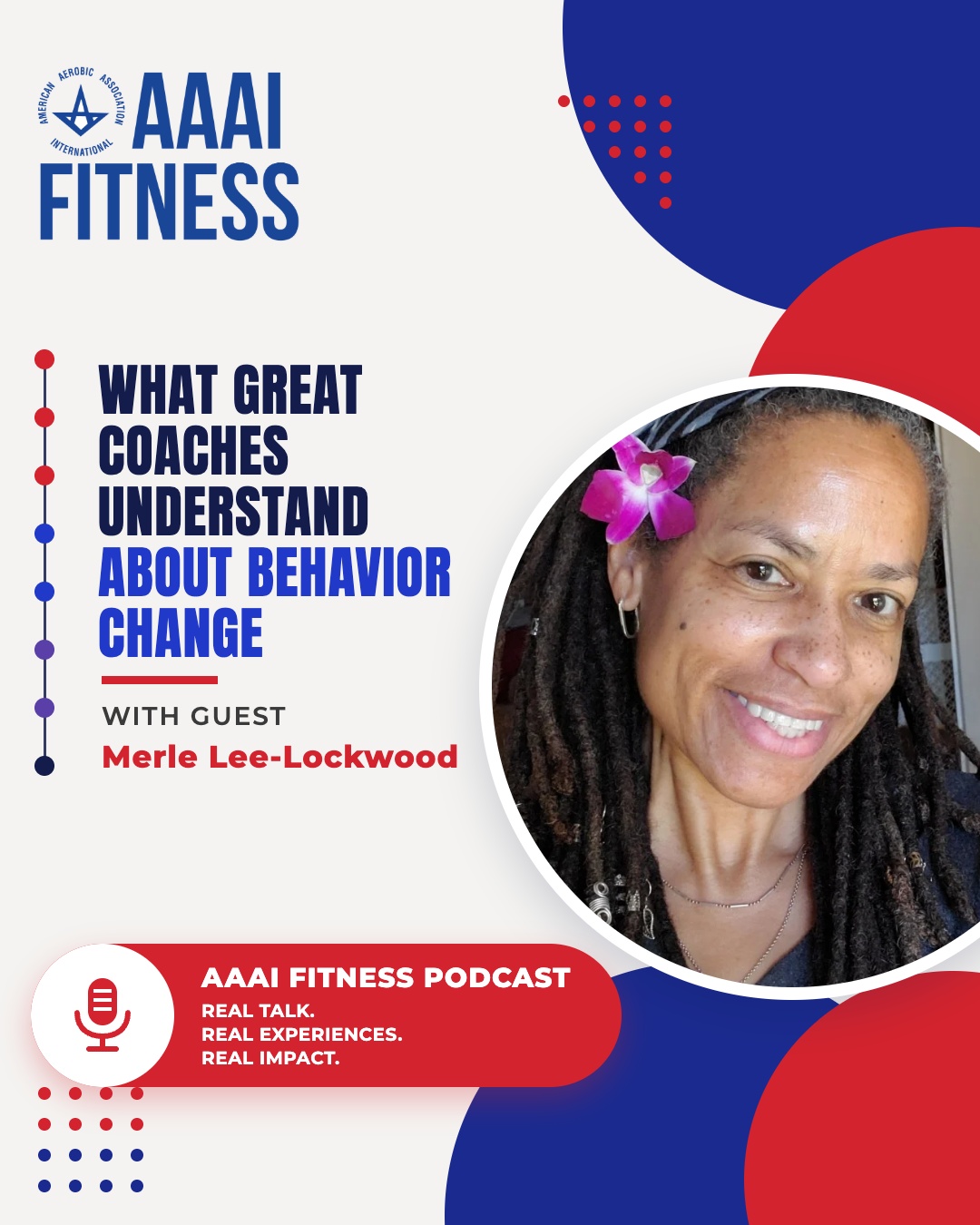
In a recent AAAI Fitness interview, Merle Lee, a wellness coach with decades of experience in the fitness industry, shared her perspective on nutrition, behavior change, stress management, motivation, client relationships, and the importance of knowing when a client needs more than a workout.
Move Beyond the Surface-Level Goal
Fitness professionals hear the same goals over and over: “I want to lose weight,” “I want to tone up,” or “I want to get stronger.” It’s easy to hear those answers so often that they become little more than boxes to check on an intake form. Merle encourages trainers to go deeper.
Instead of stopping at the goal, ask why the goal matters.
That conversation can uncover the intrinsic motivation that helps a client stay connected to the process when motivation fluctuates. Someone who wants to lose weight may really want to feel better during daily activities. Someone who wants to get stronger may want the physical capacity to travel, hike, play with their grandchildren, or maintain independence.
Those answers create a stronger foundation for coaching than aesthetics alone. They also require patience. Clients may not immediately know their deeper reason, so listening and asking open-ended questions can be just as important as demonstrating the next exercise.
Behavior Change Is Bigger Than Willpower
Knowing what to do and actually doing it are two very different things. Fitness professionals understand this firsthand. We can know the value of exercise, recovery, nutrition, sleep, and stress management and still have days when we do not follow our own advice.
Clients are no different.
When someone struggles to follow through, it is tempting to label the problem as a lack of discipline. But behavior is influenced by environment, stress, habits, motivation, past experiences, and the meaning attached to a goal.
Merle emphasizes consistency over perfection. The goal is not for clients to execute every healthy behavior flawlessly. It is to help them make sustainable progress and develop a stronger connection to why the change matters.
That can change the coaching conversation from “Why didn’t you do it?” to “What got in the way?” The second question opens a door.
Know Your Scope
Nutrition is another area where fitness professionals frequently find themselves navigating a tricky line. Clients will ask what trainers eat, what they should eat, or whether they need to change their diet.
But being asked a question does not automatically make it part of a trainer’s professional scope.
Merle points out that trainers may be able to provide basic guidance within their education and scope, while more individualized nutrition needs may require collaboration with an appropriately qualified professional. Fitness professionals do not have to be the answer to every client need.
Knowing when to refer, collaborate, or bring another professional into the conversation is part of being a responsible coach.
Stress and Recovery Belong in the Conversation
Clients bring their entire lives into the gym. Work stress, family responsibilities, poor sleep, and countless other demands can affect how they move, recover, and follow through.
Merle emphasizes the importance of considering stress management as part of overall wellness. Breathwork is one tool discussed in the interview, including box breathing and other intentional breathing practices.
The same applies to sleep and rest.
More exercise is not automatically better exercise. A client who wants to train every day may need a coach who is willing to explain why recovery matters rather than simply saying yes because the client is enthusiastic.
Good coaching sometimes means knowing when to say, “Today, recovery is the workout.”
Coaching Is More Than Counting Reps
The fitness industry keeps evolving, but the fundamentals of coaching remain remarkably human.
Listen. Ask better questions. Understand the person behind the goal. Stay within your scope. Know when to refer. Consider the whole picture, including movement, nutrition, stress, sleep, recovery, and behavior.
The most effective trainer may not be the person with the loudest voice, the most impressive physique, or the biggest exercise library. It may be the person who knows when to stop talking, ask one more question, and listen carefully to the answer.
That is where coaching becomes more than a workout.
Watch the Full Interview
Want to hear Merle Lee’s perspective in her own words? Watch the full AAAI Fitness interview below for the complete conversation, including behavior change, nutrition, stress management, marketing, finding your ideal client, and practical advice for working with your first personal training client.
Keep Learning

How to Ask for a Raise as a Group Fitness Instructor
You enjoy teaching group ex classes. You are reliable, show up on time, and members show up for your classes each week. And, you’ve gone the extra mile, taking on extra responsibilities and filling in for other instructors when they are sick or go on vacation. There...

5 Ways to Bust Out of a Coaching Rut
Even the most experienced fitness professionals can get stuck in a rut. You know the feeling. You walk into class, teach the same format, use the same cues, reach for the same exercises, and suddenly realize you could probably teach the entire session on autopilot....
How to Build a Long-Lasting Fitness Career
What does it take to build a fitness career that lasts for decades? Cindy Fox has some answers. With more than 40 years in the fitness industry, Cindy has watched the profession evolve from a time when certifications were barely part of the conversation to an industry...