
Fitness professionals spend their careers helping other people become stronger, healthier, and more capable. But what happens when the fitness professional suddenly becomes the person who needs to rethink everything they know about health and exercise?
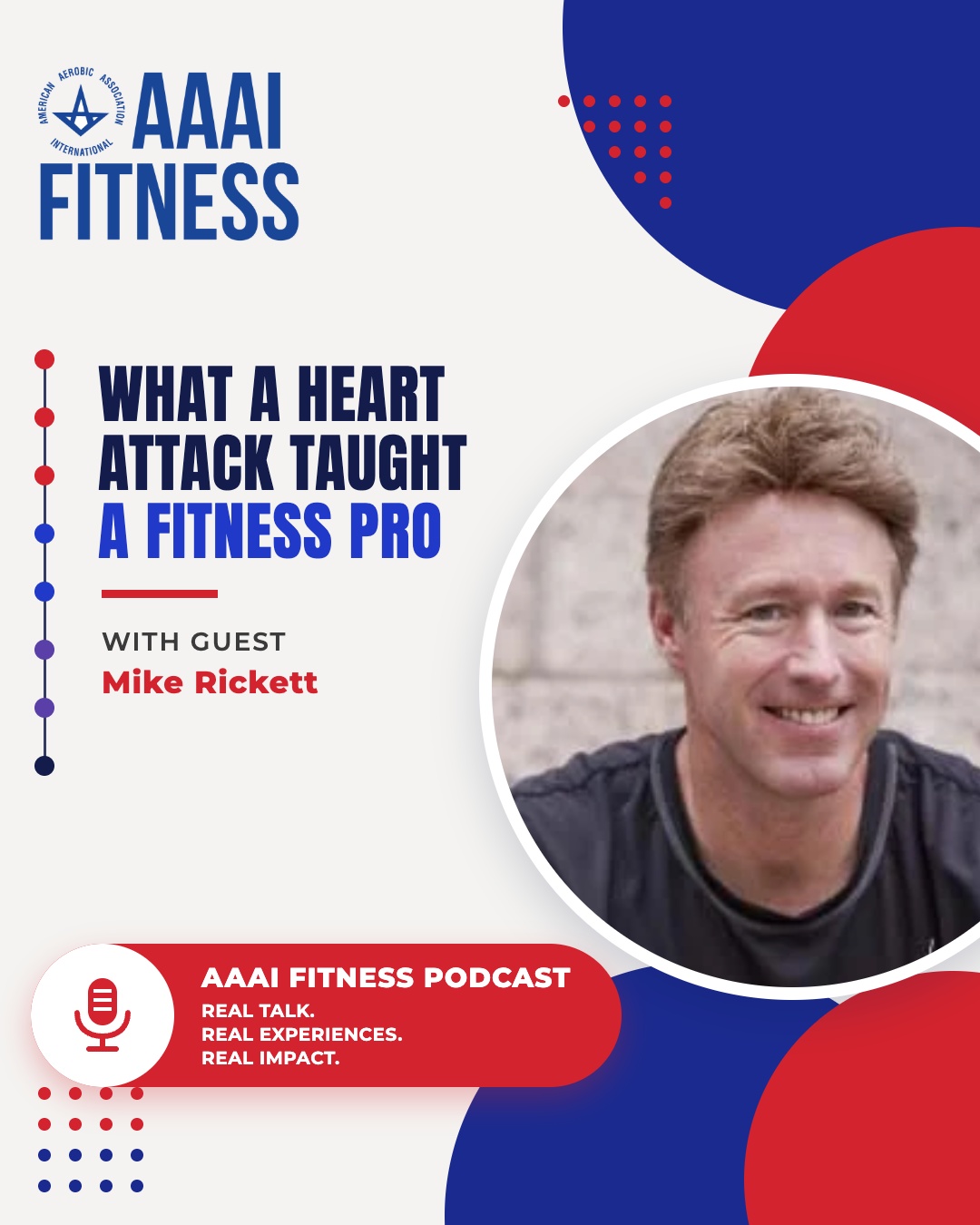
For Mike Rickett, that question became very real when he went from being an experienced exercise professional to facing a quadruple bypass. Despite years of training and a lifetime of being active, Mike discovered that looking healthy on the outside does not always mean everything is healthy on the inside. His experience offers important lessons for fitness professionals about listening to the body, paying attention to health markers, adapting exercise, and understanding the emotional side of recovery.
Healthy Doesn’t Always Look Healthy
Mike had a significant family history working against him. Both grandfathers had heart attacks, both parents experienced heart attacks before age 42, and his mother had a triple bypass at 38. Even with that history, he had spent years being active and considered himself healthy.
The warning signs were subtle at first. He became unusually winded riding his bike to work. During a trip to FitnessFest in Arizona, he stopped walking to the venue and started taking an Uber because he was short of breath. Eventually, while walking through an airport, he suddenly had to stop because he could not keep going.
The next day, he felt well enough to work out.
That is an important reminder for fitness professionals. A client does not have to look sick to have a health concern. Changes in energy, breathing, activity levels, hobbies, or normal behavior can all be worth paying attention to. Mike now encourages trainers to notice when a client says something feels different or stops doing activities they normally enjoy.
Fitness professionals are not there to diagnose medical conditions, but they are often in a unique position to notice changes in a client’s behavior and performance. Knowing when to encourage someone to seek medical evaluation is an important part of being a responsible fitness professional.
Know the Numbers, Not Just the Mirror
Mike’s story also highlights the importance of paying attention to health markers.
Before his surgery, his cholesterol and blood pressure were elevated. His LDL was around 150, and his blood pressure eventually reached extremely high levels. Yet he still looked and felt healthy much of the time.
For fitness professionals, this reinforces an important distinction: fitness and health are related, but they are not interchangeable.
Someone can exercise regularly and still have risk factors that deserve medical attention. Trainers can encourage clients to establish baseline measurements, understand their health history, and follow up with qualified healthcare professionals when something changes.
The goal is not to turn fitness professionals into diagnosticians. It is to help them become better observers and better advocates for their clients.
Recovery Requires More Than Exercise
After discovering that four coronary arteries were completely blocked and another was 95% blocked, Mike underwent an eight-hour surgical process that ultimately included a quadruple bypass. Recovery was not simply a matter of getting back into the gym.
One of the biggest lessons came through cardiac rehabilitation. Mike initially believed he knew enough to manage his own recovery, but the rehabilitation program gave him something he couldn’t get by relying on his professional knowledge: perspective.
He saw people at different stages of recovery and learned to break goals into smaller, manageable steps. Walking became a major part of his rehabilitation, and the process helped him understand that recovery is not about proving how tough you are. It is about gradually rebuilding capacity.
That lesson applies far beyond cardiac rehabilitation. Fitness professionals working with clients returning from illness, injury, surgery, or other major life events need to understand that progress may look very different from what it did before.
The Mental Side of Recovery Matters
Physical recovery was only part of Mike’s experience.
After major heart surgery, he experienced changes in sleep, exercise patterns, emotions, and interests. A therapist explained that recovering from such a significant event can feel like restarting an entire system. The body has been through an enormous physiological stressor, and the person may not immediately feel like the same person they were before.
For fitness professionals, this is a valuable reminder that the person standing in front of you is more than a body completing an exercise program.
A client returning after a major health event may be dealing with fear, frustration, anxiety, or a loss of confidence. Their physical limitations may be obvious, but their emotional experience may not be. Creating an environment where clients can progress without feeling pressured to perform like their former selves is part of good coaching.
Change the Goal, Not the Desire to Move
Mike’s training looks different now. Instead of focusing on quantity, he focuses on quality and organizes his training around different goals, including building strength, neurological work, and metabolic conditioning.
He has also modified movements and activities based on what his body can tolerate. His warm-up is longer than his workout, and he focuses on joint movement, rotation, extension, flexion, and movement across the body. He also modified activities he loves, including dancing, as needed.
This is a useful lesson for every fitness professional: modification is not failure.
The goal of training should not always be to return someone to exactly what they did before. Sometimes the better goal is finding a new way to help them participate in the activities they love.
That may mean changing the exercise, reducing the intensity, adjusting the volume, using different equipment, or approaching movement from an entirely different direction.
Build Capacity Before You Need It
When asked what people can do right now to improve their health, Mike highlighted three things: maintain lean body mass, pay attention to health numbers, and listen to changes in the body.
For fitness professionals, that first point is especially relevant. Strength training and maintaining lean body mass are not simply about aesthetics or performance. Building physical capacity can give people a greater foundation from which to recover when life throws an unexpected challenge their way.
That does not mean exercise can prevent every illness or guarantee an easier recovery. It does mean that helping clients build strength, maintain physical function, and develop sustainable movement habits can support health across the lifespan.
Fitness Is About More Than the Workout
Perhaps the biggest lesson from Mike’s experience is that health is not one-dimensional.
His recovery changed how he thinks about training, but it also changed how he thinks about life. He talks about making time for experiences, relationships, travel, and the things that bring meaning and enjoyment. His book, Stronger Beyond the Storm, grew out of his experience but ultimately became a broader reflection on the different storms people face throughout their lives.
For fitness professionals, that perspective matters.
The ultimate goal is not simply to help someone lift more weight, run faster, or complete another workout. Fitness can help people participate more fully in their lives.
Sometimes the most successful program is the one that gives someone the strength and confidence to travel, play with their grandchildren, dance with a partner, return to a favorite hobby, or simply feel capable in their own body.
Mike’s story is a powerful reminder that even experienced fitness professionals can face unexpected health challenges. The lesson is not to fear what could go wrong. It is to pay attention, keep learning, adapt when necessary, and remember that being fit is only one part of living well.
Watch the Full Interview
Mike Rickett shares much more about his quadruple bypass, cardiac rehabilitation, recovery, exercise modifications, mental health, and what he learned from his experience in the full interview.
Watch the full interview below and hear his story in his own words.
Keep Going

How to Create Your Own Fitness Career Path
A career in fitness is about more than teaching classes or designing workout programs. It’s an opportunity to help people improve their health, build confidence, and create lasting lifestyle changes. Whether your interests lie in exercise science, group fitness,...
What Great Coaches Understand About Behavior Change
Personal training is about movement, but great coaching is about people. Clients rarely walk through the gym doors with a goal that is only about exercise. They may say they want to lose weight, build muscle, get stronger, or improve their fitness, but underneath that...

How to Ask for a Raise as a Group Fitness Instructor
You enjoy teaching group ex classes. You are reliable, show up on time, and members show up for your classes each week. And, you’ve gone the extra mile, taking on extra responsibilities and filling in for other instructors when they are sick or go on vacation. There...