
What does it take to build a fitness career that lasts for decades?
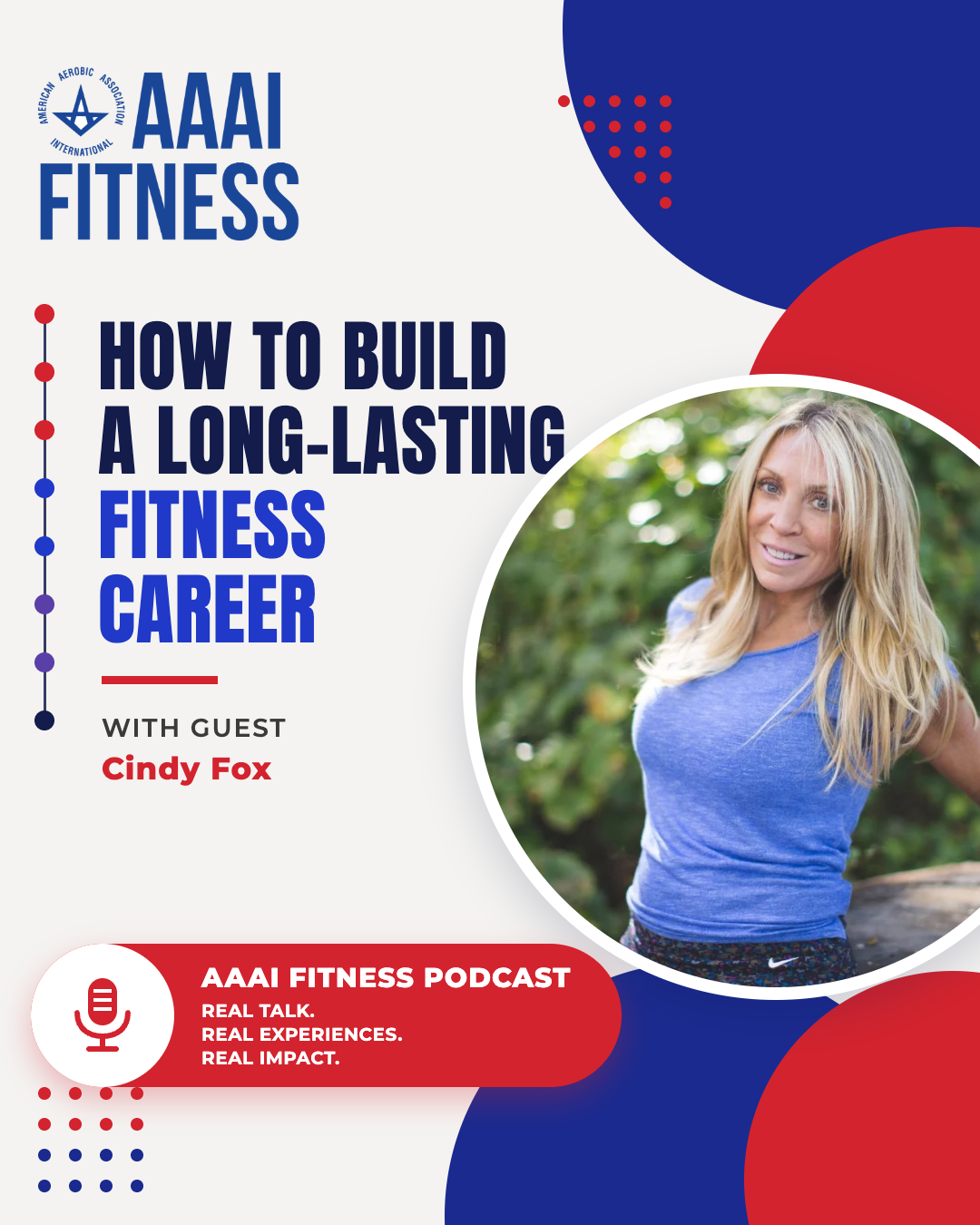
Cindy Fox has some answers. With more than 40 years in the fitness industry, Cindy has watched the profession evolve from a time when certifications were barely part of the conversation to an industry filled with specialized education, technology, and new training opportunities.
Her career offers valuable lessons for anyone who wants to build a sustainable future in fitness.
Your Training Should Change as Your Clients Change
When Cindy started training, she was young, enthusiastic, and focused on fitness. Over time, her approach changed as she gained experience and began working with people at different stages of life.
One of the biggest changes was learning to think beyond whether an exercise could be performed. Today, Cindy considers whether a client is ready for it, whether it fits their goals and abilities, and whether it supports their long-term health.
She points to younger trainers working with older beginners as an example. An exercise such as a box jump might be appropriate for one person but completely inappropriate for someone who has never exercised before. A client needs the strength, mobility, coordination, and confidence to perform an exercise safely.
Experience teaches trainers to look at the whole person, not simply the exercise.
Longevity Requires Knowing Your Own Limits
Cindy also learned that a long career requires taking care of the trainer, too.
Early in her career, she could spend long days teaching classes, training clients, helping members, conducting orientations, and doing whatever else needed to be done around the facility. Eventually, she realized that working longer did not necessarily mean working better.
Knowing when you have reached your limit matters. Trainers need enough energy and attention to give clients the quality experience they deserve.
For Cindy, having other interests and responsibilities outside the gym helped her keep fitness as something she genuinely loved. That passion became an important part of her longevity.
Clients Don’t Just Buy a Certification
Certification can open the door to a career, but it does not automatically fill your schedule.
Cindy remembers building relationships with clients through group fitness, being approachable, offering advice when appropriate, and simply being visible in the gym. She encourages new trainers to talk to people, offer free sessions or educational content, use social media, and give potential clients a chance to experience what they can do.
A certificate establishes education and credibility. Your ability to communicate, connect, coach, and deliver results is what helps turn that credential into a career.
Professionalism Matters
Cindy has also seen how quickly poor decisions can damage a trainer’s reputation.
Working around a gym’s rules, making secret arrangements with members, or training clients off the books can jeopardize more than one paycheck. It can affect the trust a trainer has built with an employer, clients, and other professionals.
The same applies to how trainers approach potential clients. Being friendly and available is valuable. Being pushy is not. If someone clearly does not want to engage, respect that boundary.
Professionalism is not just about what happens during a training session. It is reflected in every interaction.
Experience Should Make You More Adaptable
Over four decades, Cindy has worked with changing populations, evolving technology, different training philosophies, and clients with increasingly diverse needs.
Her experience has made her more thoughtful, not more rigid.
That is one of the greatest advantages of building a long career in fitness. You learn what works, what does not, and when something needs to change. You become better at recognizing limitations, modifying exercises, communicating with clients, and understanding that the perfect workout is not always the hardest workout.
The Career Is Bigger Than the Workout
A successful fitness career is built on much more than sets and repetitions.
It requires education, communication, professionalism, adaptability, boundaries, and a willingness to keep learning. It also requires understanding that your clients are real people with jobs, families, stress, responsibilities, and lives outside the gym.
Cindy Fox’s 40-plus years in fitness are a reminder that longevity is not about doing the same thing for decades. It is about continuing to grow while staying connected to why you entered the profession in the first place.
Listen to Cindy’s advice below by watching her full interview.
Learn More Here

How to Ask for a Raise as a Group Fitness Instructor
You enjoy teaching group ex classes. You are reliable, show up on time, and members show up for your classes each week. And, you’ve gone the extra mile, taking on extra responsibilities and filling in for other instructors when they are sick or go on vacation. There...
5 Ways to Bust Out of a Coaching Rut
Even the most experienced fitness professionals can get stuck in a rut. You know the feeling. You walk into class, teach the same format, use the same cues, reach for the same exercises, and suddenly realize you could probably teach the entire session on autopilot....

Why Dual-Tasking Belongs in Every Fitness Program
Dual-tasking is the practice of performing two tasks at the same time, combining physical movement with a cognitive challenge. It might mean walking while talking, stepping side to side while counting, or learning a movement pattern while responding to questions.While...